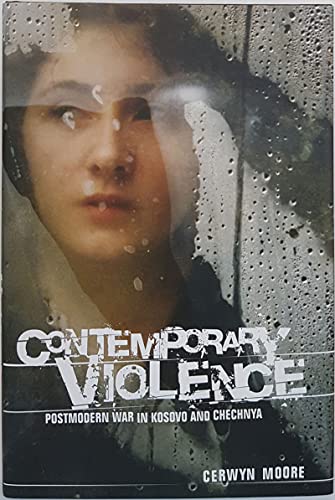
Contemporary Violence
by Cerwyn Moore
"Postmodern War in Kosovo and Chechnya"
Popularity
2.27 / 5
* A book's popularity is determined by how it compares to all other books on this website.
Where to buy?
Buy from Amazon* If you buy this book through the link above, we may receive a small commission at no extra cost to you.
Contemporary Violence by Cerwyn Moore
Details
War:
War in Afghanistan
Perspective:
Researcher
Biography:
No
Region:
Europe
Page Count:
192
Published Date:
2011
ISBN13:
9780719075995
Description
Brief Summary
Contemporary Violence: Postmodern War in Kosovo and Chechnya by Cerwyn Moore is a scholarly exploration of the dynamics of contemporary violence and armed resistance movements in the regions of Kosovo and the North Caucasus. The book is grounded in several years of field research and utilizes interpretive International Relations (IR) theory to analyze empirical data. Moore delves into the various narratives and contexts that influenced the strategies and actions of the Kosovo Liberation Army and the armed forces of the Chechen republic of Ichkeria during their respective conflicts in 1999.
Main Themes and Topics
The book tackles significant themes related to contemporary violence, including the interplay of regional politics, trans-local identity, and globalization. It examines the role of narratives and hermeneutic accounts in shaping International Relations and how these influence strategies of war. Moore also explores the visual aspects of contemporary security, criminality, and emotionality, showcasing the complex network of factors driving armed resistance movements. The focus on post-positivist analysis offers readers an in-depth understanding of the intricate relationship between storytelling and the dynamics of conflict.
Writing Style and Tone
Cerwyn Moore adopts an academic and analytical style throughout Contemporary Violence. The tone is both informative and interpretative, reflecting the depth of research and the integration of IR theory with empirical findings. Moore's approach ensures that the content remains accessible to scholars and students while maintaining a rigorous analytical framework. The book is designed to be a substantial addition to the study of IR theory, making it suitable for academic audiences interested in political studies, area studies, and sociological perspectives.
Criticism
While Contemporary Violence excels in its academic rigor and depth of research, some readers may find the book's reliance on dense theoretical frameworks challenging. The integration of interpretive approaches and post-positivist analysis requires a certain level of familiarity with IR theory, which could be daunting for those new to the field. Additionally, the focus on specific case studies may limit its appeal to readers seeking a broader overview of contemporary global conflicts.


