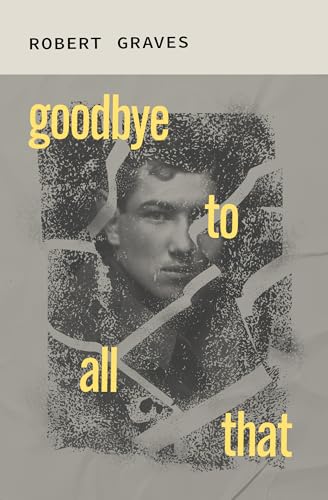
Goodbye to All That
by Robert Graves
Popularity
4.77 / 5
* A book's popularity is determined by how it compares to all other books on this website.
Where to buy?
Buy from Amazon* If you buy this book through the link above, we may receive a small commission at no extra cost to you.
Goodbye to All That by Robert Graves
Details
War:
World War I
Perspective:
Infantry
True Story:
Yes
Biography:
Yes
Region:
Europe
Page Count:
384
Published Date:
2025
ISBN13:
9781504097888
Summary
Goodbye to All That is Robert Graves' acclaimed memoir published in 1929, chronicling his experiences during World War I and his disillusionment with British society. The book details his time as a young officer in the Royal Welch Fusiliers, depicting the brutal realities of trench warfare on the Western Front. Graves candidly describes the horrors of combat, his relationships with fellow soldiers including poet Siegfried Sassoon, and his struggle with shell shock. The memoir also covers his unhappy schooling and eventual decision to leave England, offering a frank critique of class, military leadership, and post war Britain.
Review of Goodbye to All That by Robert Graves
Robert Graves's "Goodbye to All That" stands as one of the most significant memoirs to emerge from the First World War, offering readers an unflinching account of trench warfare alongside a broader meditation on the collapse of pre-war British society. First published in 1929, the book represents more than a simple war narrative; it serves as both a personal reckoning with trauma and a farewell to the values and assumptions that governed Edwardian England.
The memoir traces Graves's journey from his schooldays at Charterhouse through his service with the Royal Welch Fusiliers and into the immediate post-war years. Born in 1895 to a middle-class family, Graves enlisted at the outbreak of war in 1914, driven by the same patriotic fervor that swept through his generation. What distinguishes his account from many contemporary war memoirs is the stark honesty with which he depicts the brutality, chaos, and absurdity of trench warfare. Graves does not romanticize combat or cloak military incompetence in noble language. Instead, he presents the Western Front as a place of random death, bureaucratic dysfunction, and psychological disintegration.
The strength of "Goodbye to All That" lies partly in its documentary precision. Graves meticulously records the details of military life: the grinding routine of trench duty, the constant threat of snipers and artillery, the inadequate supplies, and the class tensions between officers and enlisted men. His descriptions of battles, including his participation in the Somme offensive, convey the confusion and terror of industrial warfare with visceral immediacy. The memoir notably includes his account of being so severely wounded that he was incorrectly reported as having died, a bureaucratic error that his parents read about in newspapers before learning he had survived.
Beyond the battlefield, Graves examines the social world of the British officer class with an anthropologist's detachment. He chronicles the petty hierarchies, the obsession with proper form, and the disconnect between staff officers safely behind the lines and fighting troops in the trenches. His portraits of fellow soldiers, including his friendship with the poet Siegfried Sassoon, add depth to the narrative and illustrate the bonds formed under extreme circumstances. The relationship with Sassoon, who famously wrote a public declaration against the war's continuation, represents a crucial element in Graves's own evolving understanding of the conflict.
The memoir's scope extends beyond military service to encompass Graves's difficult reintegration into civilian life. His struggles with what would now be recognized as post-traumatic stress disorder, his troubled marriage, and his attempts to establish himself as a poet and writer reveal the lasting damage inflicted by the war. Graves does not present himself as a hero or victim but as someone trying to make sense of experiences that shattered his generation's assumptions about duty, honor, and progress. The title itself signals his determination to leave behind both the war and the social conventions of pre-war Britain.
Graves's prose style matches his thematic concerns. The writing is direct, unsentimental, and often darkly humorous. He employs irony effectively, particularly when juxtaposing official military rhetoric with the grim realities of trench life. This approach gives the memoir an immediacy that more polished or literary accounts sometimes lack. The conversational tone makes the horror more accessible, allowing readers to grasp the daily experience of soldiers rather than viewing the war through the distancing lens of grand strategy or political analysis.
The book generated controversy upon publication, particularly regarding Graves's candid treatment of military leadership and his revelations about the personal lives of fellow writers and soldiers. Some criticized the memoir for inaccuracies and embellishments, charges that Graves partly acknowledged in later editions. However, these concerns do not diminish the work's essential truth or its historical importance. The memoir captures something fundamental about how the war transformed British society and shattered the confidence of an entire generation.
"Goodbye to All That" remains relevant decades after its publication because it addresses timeless questions about war, memory, and social change. The memoir documents not just one man's experience but the larger rupture in Western civilization that the First World War represented. For contemporary readers, the book offers insight into how societies process collective trauma and how individuals attempt to rebuild their lives after catastrophic events. Graves's determination to say goodbye to the old world and create something new resonates beyond its specific historical moment, making this memoir an enduring testament to resilience and renewal in the face of unprecedented destruction.


