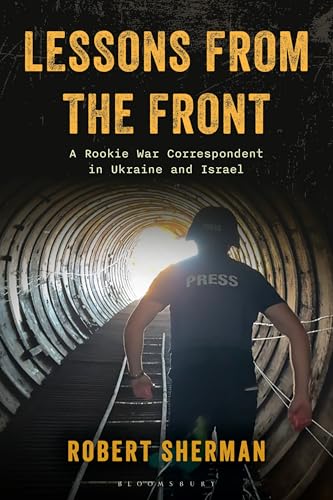
Lessons from the Front
by Robert Sherman
"A Rookie War Correspondent in Ukraine and Israel"
Popularity
4.62 / 5
* A book's popularity is determined by how it compares to all other books on this website.
Where to buy?
Buy from Amazon* If you buy this book through the link above, we may receive a small commission at no extra cost to you.
Lessons from the Front by Robert Sherman
Details
War:
Russo-Ukrainian War
Perspective:
War Correspondents
Biography:
No
Region:
Middle East
Published Date:
2025
ISBN13:
9798881807153
Review of Lessons from the Front by Robert Sherman
Robert Sherman's "Lessons from the Front" offers readers a ground-level perspective on two of the most significant conflicts of the early 21st century. As a self-described rookie war correspondent, Sherman brings fresh eyes to the Israel and Ukraine conflict zones, documenting his experiences with a combination of vulnerability and determination that distinguishes this work from more seasoned war reporting.
The book operates on two distinct levels. First, it serves as a chronicle of Sherman's observations from active conflict areas, providing snapshots of life in regions where violence has become routine. Second, it functions as a professional memoir of sorts, tracking the author's evolution from inexperienced observer to someone beginning to understand the complexities of conflict journalism. This dual nature gives the work an educational quality that extends beyond the conflicts themselves to encompass the practice of war reporting.
Sherman's rookie status, rather than being a limitation, becomes one of the book's strengths. The learning curve he experiences mirrors what many readers might feel when trying to comprehend the multifaceted nature of modern warfare. His willingness to acknowledge gaps in his understanding and his documentation of mistakes made along the way creates an accessible entry point for those unfamiliar with the intricacies of these conflicts. The narrative doesn't presume expertise but rather builds it gradually, bringing readers along on the journey.
The structure of the book allows for examination of two very different conflict environments. The Israel section and the Ukraine section each present unique challenges and contexts, and Sherman's approach to each reveals both the universal aspects of war reporting and the specific demands each situation places on journalists. The contrasts between these theaters of conflict illuminate how geography, history, and international involvement shape not only the conflicts themselves but also how they can be covered and understood.
One notable aspect of the work is its attention to the practical realities of conflict journalism. Sherman addresses the logistical challenges, the ethical dilemmas, and the personal toll of working in dangerous environments. These elements provide valuable context often missing from polished news reports. Readers gain insight into the decision-making processes that determine what stories get told and how journalists position themselves to capture events while managing risk.
The author's documentation of interactions with local populations adds depth to the narrative. Rather than focusing solely on military operations or political developments, Sherman includes encounters with civilians navigating life amid ongoing violence. These human elements prevent the conflicts from becoming abstract and remind readers of the daily realities faced by those who cannot leave when the fighting intensifies.
Sherman's writing style remains straightforward throughout, avoiding the temptation to dramatize already dramatic situations. This restraint serves the material well, allowing events to speak for themselves without manufactured tension. The prose focuses on clear description and honest reflection rather than literary flourish, which aligns with the book's educational mission.
The book also touches on the role of media in modern conflicts and how information flows from war zones to global audiences. Sherman's position as a relatively new correspondent provides perspective on how journalists develop sources, verify information, and make decisions about what to report in fast-moving situations where complete information is rarely available. These insights prove valuable for understanding the news consumers receive about ongoing conflicts.
Certain limitations should be noted. As a rookie correspondent, Sherman's access and contacts may differ from those available to more established journalists, potentially affecting the scope of situations he can document. Additionally, the book represents a specific time period in both conflicts, and readers should understand that conditions and contexts in both regions continue to evolve beyond the timeframe covered in these pages.
The value of "Lessons from the Front" lies not in comprehensive analysis or definitive answers about these conflicts, but in its honest portrayal of the learning process involved in understanding and reporting on war. Sherman's documentation of his rookie experiences provides a unique lens through which to view these conflicts, one that emphasizes growth, adaptation, and the human capacity to bear witness to difficult realities.
For readers seeking to understand modern conflict journalism or gain perspective on the Israel and Ukraine situations through the eyes of someone discovering these realities firsthand, Sherman's work offers a worthwhile contribution. The book serves both as a record of specific conflicts and as a meditation on what it means to step into the role of observer and chronicler in the world's most challenging environments.


