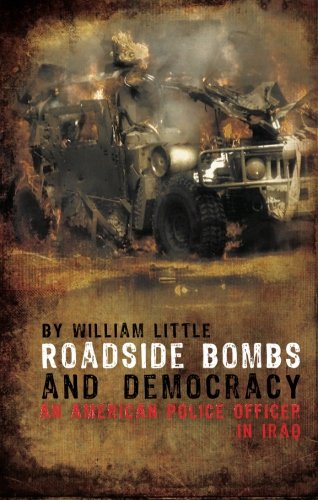
Roadside Bombs and Democracy
by William Little
"An American Police Officer in Iraq"
Popularity
2.35 / 5
* A book's popularity is determined by how it compares to all other books on this website.
Where to buy?
Buy from Amazon* If you buy this book through the link above, we may receive a small commission at no extra cost to you.
Roadside Bombs and Democracy by William Little
Details
War:
Iraq War
Perspective:
Guerrilla Fighters
Military Unit:
US Army
True Story:
Yes
Biography:
Yes
Region:
Middle East
Page Count:
229
Published Date:
2009
ISBN13:
9781606048269
Description
Main Themes and Topics
Roadside Bombs and Democracy by William Little delves into the complex dynamics of post-conflict societies, focusing on the efforts to establish democratic policing in war-torn regions. The book primarily covers the author's real-world experiences as an American police officer advising and training local forces in Kosovo and Iraq. It addresses themes such as the challenges of peacekeeping, the intricacies of cultural and religious differences, and the struggle to build trust in environments fraught with tension and danger. Through the lens of Little's firsthand accounts, readers gain insight into the practical and ethical dilemmas of international law enforcement and the pursuit of democracy in volatile settings.
Writing Style and Tone
William Little's narrative is direct and immersive, providing a vivid portrayal of life on the ground as an advisor in conflict zones. His writing is marked by clarity and a no-nonsense approach that reflects his law enforcement background. The tone of the book combines elements of memoir and reportage, with Little often juxtaposing the harsh realities of his work with moments of introspection and personal reflection. This blend of styles makes for a compelling read, driving home the gravity of his experiences while maintaining an accessible and engaging narrative.
Brief Summary
Roadside Bombs and Democracy chronicles the journey of a former American police officer who ventures into the fraught landscapes of Kosovo and Iraq. Tasked with training and advising local police forces, the author offers a detailed account of his duties, highlighting the difficulties of navigating diverse cultural, ethnic, and religious terrains. The narrative provides a ground-floor perspective on the day-to-day operations and the broader implications of promoting democratic values in regions struggling to find stability amid chaos. Throughout the book, readers are offered a unique glimpse into the personal and professional challenges faced by those attempting to nurture peace and democracy in the shadow of conflict.
Criticism
Some readers have noted that while the book is rich in detailed descriptions and personal anecdotes, it occasionally lacks a broader analytical perspective on the political or historical contexts of Kosovo and Iraq. There is also feedback regarding the author's focus being predominantly on his own experiences, which might leave readers seeking a more comprehensive understanding of the geopolitical complexities wanting more. Nonetheless, Little's candid storytelling offers a valuable perspective on a topic that is often underexplored in mainstream discourse.