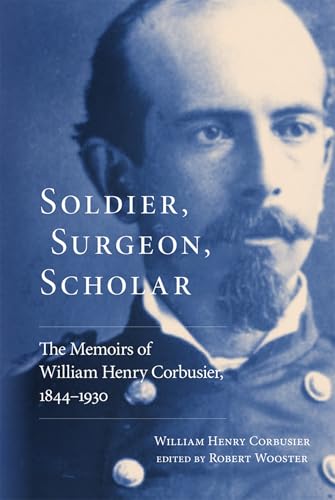
Soldier, Surgeon, Scholar
by William Henry Corbusier
"The Memoirs of William Henry Corbusier, 1844-1930"
Popularity
2.8 / 5
* A book's popularity is determined by how it compares to all other books on this website.
Where to buy?
Buy from Amazon* If you buy this book through the link above, we may receive a small commission at no extra cost to you.
Soldier, Surgeon, Scholar by William Henry Corbusier
Details
Perspective:
Medics
Military Unit:
US Army
True Story:
Yes
Biography:
Yes
Region:
North America
Published Date:
2025
ISBN13:
9780806195483
Description
Army surgeon, ethnographer, and writer William Henry Corbusier (1844-1930) witnessed the transformation of the United States from young republic to world power. In Soldier, Surgeon, Scholar, the retired army officer and surgeon recounts his experiences, which include a New York City childhood, adolescence in gold-rush California, and army life from the wilds of Arizona to the jungles of the occupied Philippines. In 1864, Corbusier joined the Union army as a contract surgeon, serving in the cavalry brigade under General Benjamin Grierson. His memoir covers seventeen military assignments in the South, the Northeast, the Great Lakes, and the American West, as well as two tours of duty in the Philippine Islands. Enthusiastically embracing these frequent relocations, Corbusier delighted in observing frontier peoples and studying natural history. An ethnographer and ethnologist, Corbusier published studies of the languages and cultures of the Yavapai, the Sioux, and the Shoshoni. And his memoir records his observations on American Indian dances and ceremonies and his medical treatment of prominent figures, such as Sarah Winnemucca, Red Cloud, and American Horse. An account largely free of self-promotion and editorializing, Corbusier's memoir of his eight decades of widespread experiences is a fascinating work of extraordinary breadth. Corbusier's wife, Fanny, also recorded her reminiscences (Fanny Dunbar Corbusier: Recollection of Army Life in the Frontier West), and together, these companion memoirs present a unique view of frontier army life with two distinct viewpoints on the shared events of Fanny and William's marriage, as well as the separate topics that husband and wife, respectively, deemed worth recounting.


