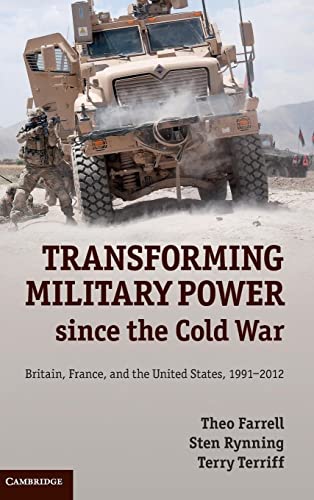
Transforming Military Power since the Cold War
by Theo Farrell
"Britain, France, and the United States, 1991–2012"
Popularity
4.18 / 5
* A book's popularity is determined by how it compares to all other books on this website.
Where to buy?
Buy from Amazon* If you buy this book through the link above, we may receive a small commission at no extra cost to you.
Transforming Military Power since the Cold War by Theo Farrell
Details
War:
Cold War
Perspective:
Researcher
True Story:
Yes
Biography:
No
Region:
Europe
Page Count:
321
Published Date:
2013
ISBN13:
9781107044326
Description
Main Themes and Topics
Theo Farrell's Transforming Military Power since the Cold War delves into the significant changes that Western military forces have undergone since the dissolution of the Cold War. Through an empirically rich narrative, Farrell examines the transformation in military strategies, technological advancements, and structural reforms within the West's primary war-fighting armies. The book meticulously explores how these forces have adapted to the changing geopolitical landscape, addressing the complexities introduced by new warfare technologies and the evolving nature of global threats.
Writing Style and Tone
Farrell's writing is characterized by its analytical precision and detailed exposition. He employs a scholarly tone that is both informative and accessible, making complex military transformations understandable to both academic and general audiences. The narrative is methodically structured, allowing readers to follow the progression of military evolution over several decades. Farrell balances technical jargon with clear explanations, ensuring that the text remains engaging and insightful.
Brief Summary
Transforming Military Power since the Cold War offers a comprehensive exploration of the Western military forces' evolution in the post-Cold War era. Through a thorough analysis, Farrell presents how armies have redefined their operational doctrines and capacity in response to new security challenges. The book serves as a critical resource for understanding the dynamic interplay between military innovation and global political shifts. By documenting key transformations, Farrell provides readers with a nuanced understanding of the strategies that have shaped the contemporary military landscape.


