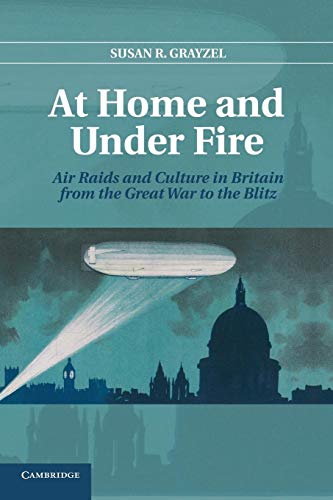
At Home and under Fire
by Susan R. Grayzel
"Air Raids and Culture in Britain from the Great War to the Blitz"
Popularity
3.11 / 5
* A book's popularity is determined by how it compares to all other books on this website.
Where to buy?
Buy from Amazon* If you buy this book through the link above, we may receive a small commission at no extra cost to you.
At Home and under Fire by Susan R. Grayzel
Details
War:
World War I
Perspective:
Researcher
Biography:
No
Region:
Europe
Published Date:
2014
ISBN13:
9781107679412
Description
Main Themes and Topics
At Home and under Fire by Susan R. Grayzel delves into the profound impact of aerial warfare on British civilians during the First and Second World Wars. The book examines how the advent of air raids transformed civilians, traditionally shielded from the battleground, into direct targets of war. Grayzel explores the psychological and societal shifts prompted by this reality, highlighting how memories of World War I bombings influenced British perceptions and responses to threats in the interwar period and during the Blitz. Key themes include the transformation of domestic spaces into sites of war, the enduring trauma and fear experienced by civilians, and the critical role of gender in defining civilian engagement and resilience during these tumultuous times.
Writing Style and Tone
Susan R. Grayzel employs an academic yet accessible writing style in At Home and under Fire. Her tone is analytical, allowing her to dissect complex historical and social issues with clarity and precision. Grayzel's narrative is rich with historical context, offering readers a nuanced understanding of the era's socio-political climate. Despite the heavy subject matter, her prose remains engaged and informative, making the intricacies of aerial warfare's impact on civilian life approachable for both scholars and general readers alike.
Brief Summary (no spoilers)
In At Home and under Fire, Susan R. Grayzel presents a thorough study of the British civilian experience of air raids during the World Wars. She traces the evolution of air warfare from its inception in World War I, through the interwar years, and into the Blitz of World War II. Grayzel discusses how these events marked a significant departure from previous forms of warfare by directly involving civilians who were far from traditional battlefronts. Through her exploration, Grayzel illustrates the societal transformations and psychological ramifications brought about by the persistent threat of aerial attacks. This study also highlights how gender played a fundamental role in shaping civilian participation and resilience in the face of modern warfare challenges.