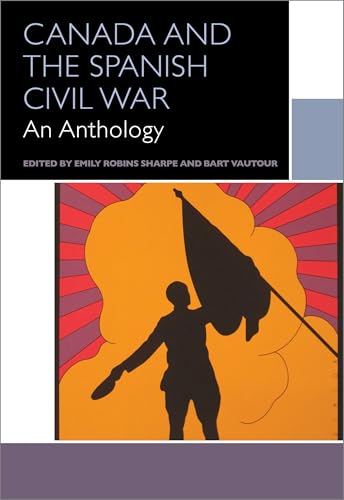
Canada and the Spanish Civil War
by Bart Vautour
"An Anthology"
Popularity
2.92 / 5
* A book's popularity is determined by how it compares to all other books on this website.
Where to buy?
Buy from Amazon* If you buy this book through the link above, we may receive a small commission at no extra cost to you.
Canada and the Spanish Civil War by Bart Vautour
Details
War:
Spanish Civil War
Perspective:
Researcher
True Story:
Yes
Biography:
No
Region:
Europe
Published Date:
2025
ISBN13:
9780776644943
Review of Canada and the Spanish Civil War by Bart Vautour
"Canada and the Spanish Civil War: An Anthology," edited by Emily Robins Sharpe, brings together a wide-ranging collection of documents, literary works, and historical materials that illuminate a largely overlooked chapter of Canadian history: the involvement of Canadians in the Spanish Civil War of 1936 to 1939. The anthology situates Canada's response to this conflict within the broader international context of the war, while also emphasizing the distinctly Canadian voices, perspectives, and experiences that emerged from this turbulent period.
The Spanish Civil War has long been recognized as a pivotal moment in twentieth-century history, drawing volunteers, journalists, and political sympathizers from around the world who saw the conflict as a struggle between democracy and fascism. Canada's contribution to this international mobilization, particularly through the Mackenzie-Papineau Battalion, is well documented in historical scholarship, but Sharpe's anthology goes further by compiling a diverse array of primary and literary sources that capture the multifaceted nature of Canadian engagement with the war. This includes not only the accounts of soldiers who volunteered to fight against Francisco Franco's Nationalist forces, but also the perspectives of writers, poets, journalists, and ordinary citizens who followed the conflict from home.
One of the anthology's notable strengths lies in its structure, which allows readers to move through different genres and forms of writing that emerged during and after the war. Sharpe includes poetry, letters, journalistic reports, and excerpts from longer literary works, creating a mosaic that reflects how Canadians processed and responded to events unfolding thousands of miles away. This multiplicity of voices serves an important function: it resists a single, monolithic narrative of Canadian involvement and instead presents the war as it was experienced and interpreted by people with varying political commitments, backgrounds, and motivations.
The editorial framing throughout the collection is particularly valuable for readers who may be less familiar with the specifics of Canadian involvement in the Spanish Civil War. Sharpe provides context that helps situate individual pieces within the larger historical narrative, without overwhelming the primary materials with excessive commentary. This balance is not always easy to strike in anthologies of this nature, but Sharpe manages to let the voices of the past speak for themselves while still offering enough scaffolding for contemporary readers to understand their significance.
The anthology also serves as an important contribution to Canadian literary history, highlighting how the Spanish Civil War influenced a generation of writers and how literary responses to international conflict have shaped Canadian cultural memory. By bringing together works that may otherwise be scattered across archives, out-of-print publications, or specialized academic journals, Sharpe performs a valuable service for scholars, students, and general readers interested in the intersections of literature, history, and political engagement.
What emerges from this collection is a portrait of Canada as an active, if often underappreciated, participant in one of the defining ideological struggles of the twentieth century. The volunteers who traveled to Spain, the writers who documented their experiences, and the broader public who debated the merits of intervention all contributed to a national conversation about fascism, democracy, and international solidarity that resonated well beyond the immediate context of the war itself.
For readers interested in Canadian history, the history of the Spanish Civil War, or the broader topic of literary responses to political conflict, this anthology offers a rich and thoughtfully curated resource. It does not attempt to provide a single, definitive interpretation of Canadian involvement, but rather invites readers to engage with the complexity and diversity of perspectives that characterized this period. The result is a collection that rewards careful reading and offers multiple entry points for further exploration, whether through academic study or personal interest in this significant historical episode.
Overall, Sharpe's anthology stands as a meaningful contribution to both Canadian studies and the broader historiography of the Spanish Civil War, preserving and contextualizing voices that might otherwise remain scattered or forgotten.


