The Best 5 World War II Tank Warfare Books
Author: Editorial Staff
Our Superlatives
Find the best book quickly!
Quick Info
World War II tank warfare wasn’t just a contest between famous machines like the Tiger, Panther, Sherman, and T-34. It was a combined-arms problem where crews, doctrine, terrain, and logistics decided who lived long enough to become “experienced.” Tanks could punch holes in a front line, but without infantry to protect them, engineers to clear obstacles, artillery to suppress anti-tank guns, and recovery teams to drag broken vehicles off the road, armor quickly turned into burning wrecks.
The five books below prioritize popular, widely-read titles from the pool while still giving you variety. You get a cinematic American tank story that puts you inside the turret during late-war fighting in Germany. You also get the unglamorous but crucial angle: the men who recovered and repaired wrecked tanks so an armored division could keep moving. On the other side, there’s a classic Tiger commander memoir that shows how German crews fought, improvised, and endured on the Eastern Front.
To balance the Western narrative, you’ll read a Soviet tank commander’s memoir—hard, direct, and shaped by the largest armored campaigns of the war. Finally, you step into the Pacific, where tanks fought in jungles and on islands under conditions that made European armored doctrine feel almost irrelevant. Together, these books explain tank warfare as it really was: violent, technical, human, and relentlessly shaped by everything surrounding the tank—not just the tank itself.
Quick Facts:
- Many tank crews feared anti-tank guns and mines more than enemy tanks, because ambush weapons could kill before a turret ever traversed.
- Recovery and repair units were combat multipliers: a tank saved and rebuilt could matter as much as a tank produced.
- Late-war fighting in towns and cities turned tanks into both battering rams and magnets for close-range threats.
- The Eastern Front produced the war’s biggest armored battles, but it was also a war of breakdowns, mud, and attrition.
- Pacific tank combat often happened at very short ranges in terrain that punished tracks, engines, and visibility.
Our Picks
In-depth look at each recommended title

Popularity:
4.95 / 5
* A book's popularity is determined by how it compares to all other books on this website.
Spearhead
by Adam Makos
A fast, human, turret-level story of late-war armored fighting—complete with a remarkable enemy perspective.
Spearhead by Adam Makos is one of the most popular modern WWII tank books for a simple reason: it reads like you’re strapped into the gunner’s seat. The story follows an American tank gunner, Clarence Smoyer, as the war moves into Germany and tank combat becomes a terrifying mix of speed, confusion, and sudden violence. Makos doesn’t treat armor as abstract “units on a map.” He shows you what it feels like when a crew’s world shrinks to intercom chatter, smoke, and the jolt of a hit.
What elevates the book is the collision of perspectives. Instead of staying purely on the American side, Makos brings in the German viewpoint to show how two young men can experience the same fight as entirely different nightmares. That dual angle turns familiar late-war battles into something sharper and more personal. If you want the emotional reality of tank warfare—fear, skill, luck, and the thin line between heroism and being in the wrong place—Spearhead is the best “starter” book on this list, and it still rewards experienced readers.

Popularity:
4.89 / 5
* A book's popularity is determined by how it compares to all other books on this website.
Death Traps
by Belton Y. Cooper
A frontline ordnance officer reveals how attrition, repairs, and recovery operations shaped every armored advance.
Death Traps by Belton Y. Cooper remains one of the most widely read armored warfare memoirs because it highlights the part of tank war most books skip: what happens after the tank is hit. Cooper served as an ordnance officer with the U.S. 3rd Armored Division, responsible for recovering wrecks, cannibalizing parts, and pushing damaged vehicles back toward the line. In his world, progress wasn’t measured only by towns captured—it was measured by whether the division still had enough running tanks to exploit the breakthrough.
The power of this book is how it turns “logistics” into lived danger. Cooper describes moving under fire to reach disabled tanks, dealing with mines and artillery, and watching the same crews rotate from confident to missing in a single day. You also get a blunt look at morale and rumor: what soldiers believed about German guns, survivability, and tactical choices when the terrain and enemy weapons made everything feel lethal. Even when readers debate some of Cooper’s conclusions, the recovery-and-repair perspective is priceless. If you want to understand why armored warfare is an industrial war fought at human scale, this book belongs on your shelf.

Popularity:
4.33 / 5
* A book's popularity is determined by how it compares to all other books on this website.
Tigers in the Mud
by Otto Carius
A classic German armored memoir—tactical, candid, and soaked in the Eastern Front’s mud-and-ice brutality.
Tigers in the Mud by Otto Carius is a pillar of WWII tank reading and one of the most popular memoirs ever written by a German armored commander. Carius writes with a practical, no-theatrics voice that makes the battlefield feel immediate: choosing firing positions, judging terrain that can swallow a heavy tank, managing ammunition, and trying to keep a crew functioning when exhaustion is constant. The Eastern Front here isn’t an epic—it’s a grinding test of nerves, maintenance, and survival.
What makes the book so compelling is the mix of technical detail and human reality. You get how a Tiger unit thinks: where it feels invulnerable, where it feels hunted, and how quickly confidence can collapse when Soviet artillery or anti-tank guns find the range. Carius also captures camaraderie and loss without turning the story into pure self-mythology. As with any German-side memoir, it’s worth reading with awareness of the wider context the author does not always foreground. But if your goal is to understand what tank command felt like under relentless pressure, this is a gripping, influential, and extremely readable firsthand account.

Popularity:
4.64 / 5
* A book's popularity is determined by how it compares to all other books on this website.
Panzer Destroyer
by Vasiliy Krysov
A Red Army tanker’s memoir that shows the scale, violence, and improvisation of the armored war against Germany.
Panzer Destroyer by Vasiliy Krysov gives you the Soviet armored perspective in a form that’s both accessible and brutal. Krysov’s memoir tracks his growth from early service into the role of tank commander, and it does so with a soldier’s focus: what worked, what failed, and what it cost. The Eastern Front is often described in enormous numbers, but Krysov pulls it back into the cramped interior of a fighting vehicle where visibility is limited, communications are imperfect, and the penalty for hesitation is immediate.
This book matters because it counters simplistic stereotypes about Soviet armor. Instead of faceless “waves,” you see learning, adaptation, and leadership under appalling pressure. Krysov writes about tactics and survival, but also about the emotional weight of repeated losses—comrades gone, crews replaced, battles blending together into a relentless forward push. It’s a strong companion to German and American memoirs because it shows the same war from the force that ultimately broke the Panzer arm through persistence, scale, and hard-earned experience. If you want a balanced tank warfare reading list, this is the Soviet voice you should include.
Popularity:
4.67 / 5
* A book's popularity is determined by how it compares to all other books on this website.
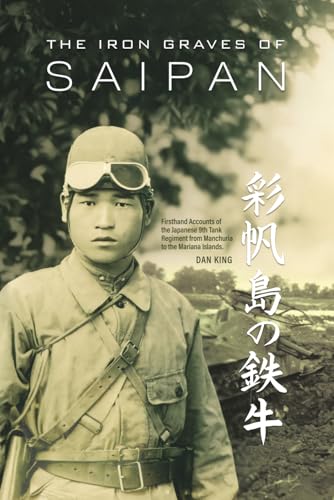
The Iron Graves of Saipan
by Dan King
A rare, tank-centered look at Japan’s armored troops and how tanks fought—and died—in island warfare.
The Iron Graves of Saipan by Dan King is popular for a reason: it covers a side of WWII armored warfare most readers never see. Instead of Normandy hedgerows or Ukrainian steppe, you’re in the Pacific—where jungle, coral, and short engagement ranges punish tanks in ways European doctrine doesn’t prepare you for. King follows the Japanese 9th Tank Regiment and uses firsthand accounts, letters, and extensive research to reconstruct what Japanese tankers experienced as the war turned against them.
The result is both tactical and haunting. You see how Japanese armor was deployed, what it could and couldn’t do against American firepower, and how quickly tanks became trapped by terrain, supply limits, and overwhelming artillery and naval gunfire. The human element is the hook: brotherhood inside the regiment, the grim acceptance that missions were increasingly desperate, and the long shadow these battles cast on survivors and families. If you want your tank warfare reading to be truly global—and to understand how armored combat changes outside Europe.