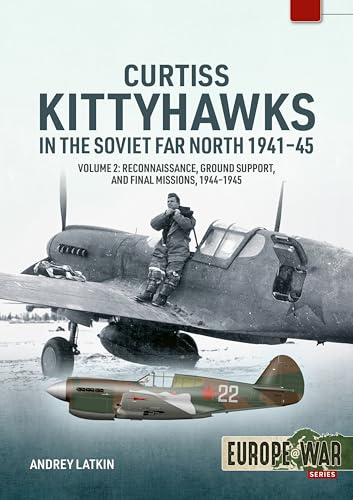
Curtiss Kittyhawks in the Soviet Far North 1941-45 Volume 2
by ANDREY. LATKIN
"Reconnaissance, Ground Support, and Final Missions, 1944-1945"
Popularity
4.23 / 5
* A book's popularity is determined by how it compares to all other books on this website.
Where to buy?
Buy from Amazon* If you buy this book through the link above, we may receive a small commission at no extra cost to you.
Curtiss Kittyhawks in the Soviet Far North 1941-45 Volume 2 by ANDREY. LATKIN
Details
War:
World War II
Perspective:
Fighter Jets
Military Unit:
Red Army
True Story:
Yes
Biography:
No
Region:
Europe
Published Date:
2025
ISBN13:
9781804517727
Summary
This book examines the operational history of American-made Curtiss Kittyhawk fighter aircraft used by Soviet forces in the Arctic regions during the final years of World War II. Volume 2 specifically covers 1944-1945, focusing on reconnaissance missions, ground support operations, and the aircraft's last combat deployments in the harsh northern theater. Author Andrey Latkin documents how these Lend-Lease aircraft performed in extreme conditions, providing detailed accounts of their tactical employment by Soviet pilots in the Far North during the war's concluding phase.
Review of Curtiss Kittyhawks in the Soviet Far North 1941-45 Volume 2 by ANDREY. LATKIN
Andrey Latkin's second volume on Curtiss Kittyhawks in the Soviet Far North continues the detailed narrative begun in the first installment, shifting focus to the aircraft's later operational history between 1944 and 1945. Where the initial volume established the arrival and early combat employment of the Kittyhawk within Soviet Arctic air units, this follow-up traces the type's evolving role as the war progressed, particularly its use in reconnaissance and ground support missions during the final years of the conflict in the northern theater.
The book is structured around the operational record of Soviet air regiments that flew the Kittyhawk in the demanding conditions of the far north, an environment marked by extreme cold, limited daylight during winter months, and challenging logistical support. Latkin draws on archival material, unit records, and photographic evidence to reconstruct the missions flown by these units, offering readers a granular view of how the aircraft was adapted and employed beyond its original design intent as a fighter. The transition toward reconnaissance and ground attack duties reflects broader shifts in Soviet air strategy as the war in the north entered its final phases, and the author does a careful job of situating these changes within the wider context of the Petsamo-Kirkenes operation and the eventual withdrawal of German forces from the region.
One of the strengths of this volume lies in its attention to unit-level detail. Rather than presenting a broad overview of the air war, Latkin focuses on specific squadrons and their day-to-day operations, giving readers insight into the practical challenges faced by pilots and ground crews alike. The Kittyhawk, originally designed as a fighter, proved adaptable to secondary roles, and the book documents this versatility through mission summaries, loss records, and personnel accounts where available. This level of specificity will appeal to readers already familiar with Lend-Lease aviation history and those seeking a deeper understanding of how American-supplied aircraft integrated into Soviet operational doctrine.
The photographic content, a hallmark of this publisher's aviation series, adds significant value to the text. Period images of Kittyhawks in Arctic conditions, often showing weathering, improvised modifications, and unit markings specific to Soviet service, provide visual context that complements the written narrative. For modelers and historians interested in the visual documentation of Lend-Lease aircraft in Soviet markings, these images are a useful resource, offering details on camouflage schemes and unit insignia that are not always well documented elsewhere.
The book's scope is deliberately narrow, focusing specifically on the far north theater rather than attempting a comprehensive history of Kittyhawk operations across the entire Eastern Front. This specialization is both a strength and a limitation. Readers seeking a broader treatment of the aircraft's service history across all Soviet fronts will need to look elsewhere, but those with a specific interest in the Arctic campaign will find this focus rewarding. The far north theater has historically received less attention in English-language aviation literature compared to the more heavily documented southern and central fronts, making this volume a useful addition to the available material on the subject.
Latkin's writing style is direct and factual, prioritizing documented operational details over narrative flourish. This approach suits the subject matter well, as the book functions primarily as a reference work rather than a dramatized history. Readers looking for a straightforward, well-researched account of specific squadron activities and aircraft deployment will find the format effective, though those preferring a more narrative-driven history may find the presentation somewhat dry in places.
Overall, this second volume serves as a solid continuation of the series, maintaining the same level of detail and archival grounding established in the first installment. It contributes meaningfully to the specialized literature on Lend-Lease aviation in Soviet service, particularly for the often-overlooked far northern theater. Readers with an interest in World War II aviation history, Soviet air operations, or the specific service record of the Curtiss Kittyhawk will find this a worthwhile addition to their collection, provided they approach it with an appreciation for its reference-oriented, detail-focused approach rather than expecting a broader narrative history.