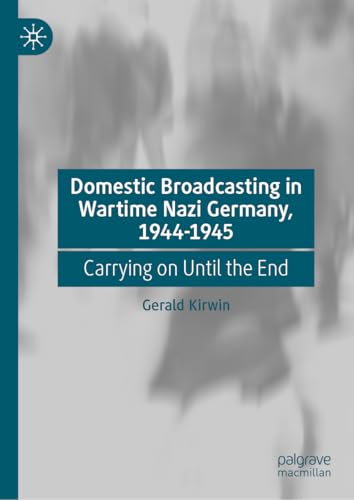
Domestic Broadcasting in Wartime Nazi Germany, 1944-1945
by Gerald Kirwin
"Carrying on Until the End"
Popularity
3.97 / 5
* A book's popularity is determined by how it compares to all other books on this website.
Where to buy?
Buy from Amazon* If you buy this book through the link above, we may receive a small commission at no extra cost to you.
Domestic Broadcasting in Wartime Nazi Germany, 1944-1945 by Gerald Kirwin
Details
War:
World War II
Perspective:
Civilian
True Story:
Yes
Biography:
No
Region:
Europe
Published Date:
2025
ISBN13:
9783031929854
Description
Brief Summary
Domestic Broadcasting in Wartime Nazi Germany, 1944-1945 by Gerald Kirwin presents an in-depth analysis of the German broadcasting sector during the last phase of World War II. As Allied and Soviet forces encroached on German borders, Nazi broadcasters were tasked with maintaining a semblance of normalcy amidst the chaos, a strategy that often clashed with the brutal reality facing the Reich. Using the BBC Monitoring Reports, Kirwin delves into the strategic meetings of the Radio Department of the Propaganda Ministry and explores the broadcasting policies that were employed during this tumultuous period. The text also examines the German public's response to these broadcasts, shedding light on the broader societal impacts of radio communication under duress.
Main Themes and Topics
One of the key themes in Kirwin's work is the dichotomy between propaganda and reality. The book illustrates the intricate balancing act undertaken by Nazi broadcasters who oscillated between attempting to preserve normality and confronting the stark realities of imminent defeat. The book also discusses the limitations faced by broadcasters, particularly due to reception problems and the illegal practice of listening to enemy stations, which posed significant challenges to the Nazi propaganda efforts. Additionally, the book touches on cultural aspects, including the controversial inclusion of 'jazz' music in broadcasts, and covers unique occurrences such as the rise and fall of Radio Werewolf and the temporary revival of religious programming during a time when Germany was nearing its collapse.
Writing Style and Tone
Gerald Kirwin employs a meticulous and scholarly approach in this book. His writing is detailed and well-researched, offering readers a comprehensive view of German domestic broadcasting during World War II. The tone is analytical, focusing on providing an objective account of the broadcasting strategies and the complex realities of the time. This rigorous approach allows Kirwin to present a nuanced exploration of the subject matter while maintaining clarity and engagement for the reader.
Criticism
While the book provides a thorough analysis of Nazi Germany's broadcasting strategies, some readers might find the level of detail overwhelming, especially those not well-versed in wartime broadcasting history. The focus on the operational intricacies of radio policy and tactics might also appeal more to readers with a keen interest in media studies or World War II history. Despite this, the book remains a valuable resource for understanding how the Nazi regime utilized broadcasting as a tool for propaganda during its final months.


