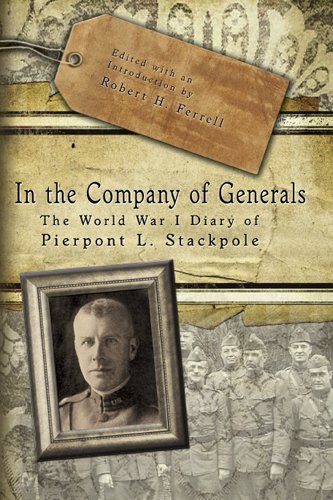
In the Company of Generals
by Robert H. Ferrell
"The World War I Diary of Pierpont L. Stackpole"
Popularity
3.31 / 5
* A book's popularity is determined by how it compares to all other books on this website.
Where to buy?
Buy from Amazon* If you buy this book through the link above, we may receive a small commission at no extra cost to you.
In the Company of Generals by Robert H. Ferrell
Details
War:
World War I
Perspective:
Commanders
True Story:
Yes
Biography:
No
Region:
Europe
Page Count:
225
Published Date:
2009
ISBN13:
9780826272003
Description
Main Themes and Topics
In the Company of Generals by Robert H. Ferrell provides a revealing glimpse into the operational dynamics and strategic intricacies of the American Expeditionary Forces during World War I. The book focuses on the diary of Pierpont Stackpole, aide to Lieutenant General Hunter Liggett, who played a crucial role in commanding the U.S. First Army during a pivotal moment on the Western Front. The primary themes revolve around military leadership, the complexities of wartime command, and the interpersonal relationships within the high command of the American forces. The diary entries offer a first-hand account of the strategies employed and hurdles faced in executing victorious maneuvers, particularly in the Meuse-Argonne Offensive.
Another key theme is the portrayal of General Liggett, a significant yet often underappreciated figure in military history. The narrative sheds light on his adeptness at adapting to the changing nature of warfare, showcasing his ability to motivate and reorganize exhausted troops to ensure strategic victories. The text highlights Liggett's interactions with subordinate commanders and provides insight into his leadership philosophy, contrasting it with other prominent military figures of the time.
Furthermore, the book explores the broader context of World War I, including the often contentious relationships among allied generals and the internal politics of the American military leadership. Through Stackpole's observations, readers gain a nuanced view of the challenges faced by commanders, including the struggle to innovate within the traditional military hierarchy.
Writing Style and Tone
Robert H. Ferrell employs a straightforward and scholarly writing style, effectively capturing the historical essence of the period. The tone is objective, relying on Stackpole's diary to let the events speak for themselves. Ferrell’s editorship ensures the diary is both engaging and accessible, reflecting a meticulous attention to detail that helps readers understand the stakes of the battles and the personalities involved. The narrative strikes a balance between personal reflection and historical analysis, providing a comprehensive view of the events and decisions that shaped the American effort on the Western Front.
Criticism
While In the Company of Generals serves as a vital historical document, some readers may find the focus on military strategy and command structure to be dense at times. The book's reliance on Stackpole's diary means that it can sometimes feel limited in scope, concentrating heavily on Liggett's perspective and interactions. Those looking for a broader view of the entire American involvement in World War I might need supplementary reading to gain a complete picture of the era. Nevertheless, the work offers rich detail for those interested in military history and leadership studies.
Brief Summary
In In the Company of Generals, readers are invited into the inner sanctum of the American military command during World War I through the eyes of Pierpont Stackpole. The narrative follows Stackpole's experiences as aide to Lieutenant General Hunter Liggett, delving into the strategic and operational challenges faced by the American forces on the Western Front. The book highlights crucial battles, including the successful Meuse-Argonne Offensive, which played a significant role in hastening the armistice. This unique diary provides an authentic look at the war, shedding light on Liggett's leadership and the pivotal decisions that shaped the course of the conflict.