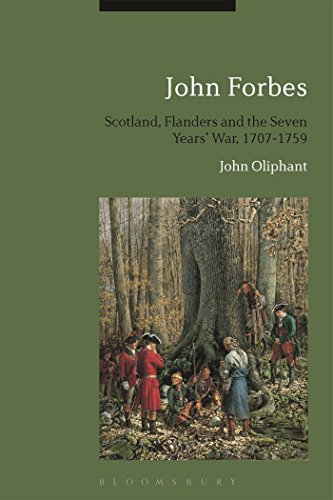
John Forbes: Scotland, Flanders and the Seven Years' War, 1707-1759
by John Oliphant
Popularity
3.34 / 5
* A book's popularity is determined by how it compares to all other books on this website.
Where to buy?
Buy from Amazon* If you buy this book through the link above, we may receive a small commission at no extra cost to you.
John Forbes: Scotland, Flanders and the Seven Years' War, 1707-1759 by John Oliphant
Details
War:
Seven Years' War
Perspective:
Commanders
True Story:
Yes
Biography:
Yes
Region:
Europe
Page Count:
201
Published Date:
2016
ISBN13:
9781350019546
Review of John Forbes: Scotland, Flanders and the Seven Years' War, 1707-1759 by John Oliphant
John Oliphant's biography of John Forbes offers a detailed and scholarly account of a Scottish soldier whose career spanned some of the most significant military conflicts of the eighteenth century. Forbes, born in 1707, rose through the ranks of the British Army to become a general whose most notable achievement was the capture of Fort Duquesne during the French and Indian War, an event that led to the founding of Pittsburgh. Oliphant traces Forbes's life from his origins in Scotland through his military education in Europe, his service in Flanders, and ultimately his command in North America during the final years of the Seven Years' War.
The book is structured chronologically, allowing readers to follow Forbes's development as a soldier and officer against the backdrop of the major European conflicts of his era. Oliphant demonstrates considerable skill in weaving together the personal narrative of Forbes with the broader historical context of the War of the Austrian Succession and the Seven Years' War. This approach helps readers understand not just what Forbes did, but why his military campaigns unfolded as they did within the larger strategic considerations of British military policy.
One of the strengths of this biography lies in its treatment of Forbes's Scottish background and how his origins shaped his military career and worldview. Oliphant does not shy away from exploring the complexities of Scottish identity within the British military establishment during this period, a topic that adds depth to the narrative beyond a simple recounting of battles and campaigns. The author's research into Forbes's early life and education provides useful context for understanding the man who would later command significant military operations.
The sections dealing with the Flanders campaigns are particularly well-researched, drawing on primary sources to illustrate the conditions under which Forbes and his contemporaries operated. Oliphant's attention to detail regarding military logistics, tactics, and the day-to-day realities of eighteenth-century warfare gives readers a grounded sense of what soldiers like Forbes actually experienced, rather than presenting an idealized or romanticized version of military life.
The culmination of the book, dealing with Forbes's North American campaign and the capture of Fort Duquesne, receives thorough treatment. Oliphant explains the strategic importance of this campaign within the larger context of the French and Indian War and demonstrates how Forbes's approach to the campaign, including his famous decision to build a new road through Pennsylvania rather than relying on existing routes, reflected both practical military considerations and his own leadership style. This section of the book benefits from Oliphant's careful use of contemporary correspondence and military records.
Throughout the biography, Oliphant maintains a scholarly approach, grounding his narrative in primary source material and avoiding excessive speculation about Forbes's inner thoughts or motivations where evidence does not support such claims. This academic rigor, while occasionally resulting in dense passages, ultimately serves the reader well by providing a reliable and well-documented account of Forbes's life and career.
The book will appeal most directly to readers with a serious interest in eighteenth-century military history, Scottish history, or the colonial conflicts in North America. Those seeking a more general or popular history may find some sections heavy with military and political detail. However, for readers willing to engage with this level of detail, the book offers substantial rewards in terms of understanding both Forbes as an individual and the broader military and political context of his times.
Oliphant's work fills a gap in the historical literature by providing a comprehensive biography of a figure whose contributions to British military history and to the early development of what would become the United States deserve greater recognition. The book stands as a valuable contribution to the study of the Seven Years' War and offers insight into the complex relationship between Scottish soldiers and the broader British military establishment during this pivotal period in European and North American history.


