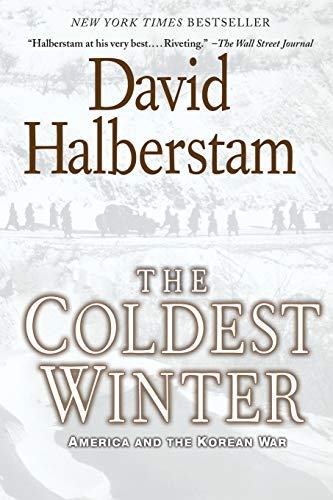
The Coldest War
by James Brady
"A Memoir of Korea"
Popularity
4.87 / 5
* A book's popularity is determined by how it compares to all other books on this website.
Where to buy?
Buy from Amazon* If you buy this book through the link above, we may receive a small commission at no extra cost to you.
The Coldest War by James Brady
Details
War:
Korean War
Perspective:
Infantry
True Story:
Yes
Biography:
No
Region:
Asia
Page Count:
256
Published Date:
2000
ISBN13:
9780312265113
Summary
The Coldest War is James Brady's firsthand account of his service as a Marine lieutenant during the Korean War. Brady vividly recounts the brutal winter combat conditions, particularly during the fighting in the mountainous terrain near the Chinese border. The memoir details the physical hardships of fighting in subzero temperatures, the camaraderie among Marines, and the chaos of combat against Chinese forces. Brady combines personal narrative with broader reflections on the forgotten nature of the Korean War, offering readers an intimate look at ground-level warfare during this often-overlooked conflict in American military history.
Review of The Coldest War by James Brady
James Brady's "The Coldest War: A Memoir of Korea" stands as one of the more distinctive personal accounts to emerge from the Korean War, offering readers a ground-level view of a conflict often overshadowed in American historical memory by World War II before it and Vietnam after it. Brady, who went on to become a well-known journalist, novelist, and columnist, served as a young Marine lieutenant during the war, and this memoir draws directly from that experience to construct a narrative that is both intimate and historically grounded.
The book's title captures a central theme that runs throughout its pages: the brutal, punishing cold that defined much of the Korean campaign, particularly during the harsh winter months when American and United Nations forces found themselves engaged in a grueling standoff against Chinese and North Korean troops. Brady does not shy away from describing the physical hardship of combat in subzero temperatures, where frostbite and exposure were as much an enemy as the opposing forces. This focus on the visceral, day-to-day reality of soldiering gives the memoir a tactile quality that distinguishes it from more detached historical accounts.
Structurally, the book benefits from Brady's background as a professional writer. His prose is clean and economical, avoiding the florid excess that sometimes creeps into war memoirs. He moves between reflective passages and sharp, immediate scenes of combat with a sense of control that keeps the narrative moving. Readers familiar with Brady's later career in journalism will recognize the same instinct for clarity and pacing that served him well in his writing for publications like Parade and Advertising Age.
What makes this memoir particularly valuable is its perspective as a junior officer's account. Brady was not a general or a strategist removed from the front lines; he was a platoon leader responsible for the men under his command, and this vantage point allows him to explore themes of leadership, fear, camaraderie, and loss in a way that feels genuine rather than performative. The relationships he describes with fellow Marines are rendered with warmth and specificity, avoiding the generic sentimentality that can flatten similar accounts. There is a clear sense of respect for the ordinary soldiers who bore the weight of a war that many Americans at home barely understood or acknowledged, earning Korea its long-standing designation as "the forgotten war."
Brady also situates his personal experience within the broader context of the conflict, touching on the political and military decisions that shaped the war's course, though he does so without turning the book into a dry historical treatise. The balance between personal memoir and historical framing is handled with a light touch, allowing the human elements of the story to remain at the forefront while still giving readers enough context to understand the larger stakes involved.
The memoir's emotional core lies in its unflinching honesty about the psychological toll of combat. Brady does not romanticize war, nor does he indulge in excessive bitterness or cynicism. Instead, he presents a measured, reflective account of what it meant to be young and thrust into a violent, confusing conflict far from home. This tone of measured reflection, arriving decades after the events described, gives the book a retrospective wisdom that enriches rather than diminishes the immediacy of the original experience.
For readers interested in military history, particularly the often-overlooked Korean War, this memoir offers a valuable addition to the literature. It complements more comprehensive historical works by providing the kind of granular, personal detail that broader histories cannot capture. Those familiar with other Korean War memoirs may find Brady's account distinguished by its literary polish and its willingness to dwell on the physical suffering caused by the climate as much as by combat itself.
Overall, "The Coldest War" succeeds as both a personal testament and a piece of historical documentation. It fills in gaps left by larger historical narratives, giving voice to the experiences of a generation of soldiers whose service in Korea has often been underappreciated. Brady's skill as a writer ensures that the memoir remains engaging and accessible, even as it grapples with difficult and painful subject matter. It stands as a worthwhile read for anyone seeking a deeper understanding of the human cost of the Korean War.