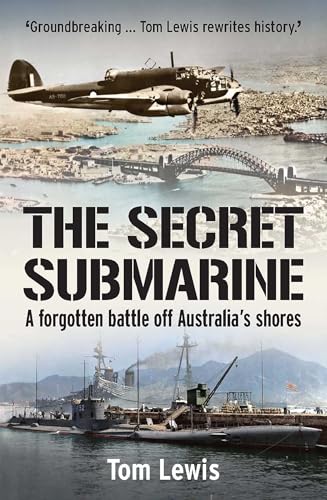
The Secret Submarine
by Doctor Tom Lewis
"A RAAF Bomber Success Story"
Popularity
3.56 / 5
* A book's popularity is determined by how it compares to all other books on this website.
Where to buy?
Buy from Amazon* If you buy this book through the link above, we may receive a small commission at no extra cost to you.
The Secret Submarine by Doctor Tom Lewis
Details
War:
World War I
Perspective:
Submarines
Biography:
No
Region:
Australia/Oceania
Page Count:
316
Published Date:
2025
ISBN13:
9781923300071
Summary
The Secret Submarine by Tom Lewis tells the story of AE2, an Australian submarine that made a daring penetration of the Dardanelles during World War I's Gallipoli campaign in 1915. The book details this largely forgotten naval operation where AE2 became the first Allied submarine to breach the heavily defended strait and enter the Sea of Marmara. Lewis examines the submarine's crew, their dangerous mission behind enemy lines, and the vessel's eventual fate. The narrative highlights an important but overlooked chapter of Australian military history during the Great War.
Review of The Secret Submarine by Doctor Tom Lewis
Doctor Tom Lewis brings his considerable expertise as a naval historian and former submarine commander to bear in "The Secret Submarine," a meticulously researched work that examines one of the most intriguing chapters in maritime military history. Lewis, who has authored numerous works on naval warfare and submarine operations, demonstrates once again his ability to transform complex technical and historical material into an engaging narrative that appeals to both specialist readers and general audiences interested in military history.
The book centers on clandestine submarine operations, a subject that has long captured public imagination yet remained shrouded in official secrecy and incomplete documentation. Lewis navigates these challenges with the skill of someone who understands both the operational realities of submarine warfare and the constraints of writing about classified or sensitive historical events. His background as a naval officer proves invaluable in interpreting documents, understanding tactical decisions, and contextualizing the human experiences of submariners operating under conditions of extreme secrecy.
What distinguishes this work from other submarine histories is Lewis's methodical approach to separating fact from mythology. The secret nature of submarine operations has generated numerous legends and unverified accounts over the decades, and Lewis takes care to identify which stories rest on solid documentary evidence and which remain in the realm of speculation. This careful treatment of sources strengthens the overall credibility of the narrative, even when dealing with operations that may never be fully declassified.
The technical aspects of submarine operations are presented with clarity and precision, reflecting Lewis's intimate knowledge of how these vessels function. Readers gain insight into the unique challenges of underwater warfare, from navigation and communication difficulties to the psychological pressures of extended deployments in confined spaces. These details enrich the historical narrative without overwhelming readers who may lack technical background. Lewis strikes an effective balance between providing sufficient detail to satisfy knowledgeable readers while remaining accessible to those new to the subject.
The human dimension of submarine service receives appropriate attention throughout the book. Lewis recognizes that behind every secret mission were sailors facing extraordinary demands and operating under conditions that tested physical endurance and mental resilience. The isolation inherent in submarine duty, combined with the added burden of maintaining operational secrecy, created unique stresses that affected crews and their families. These human elements prevent the narrative from becoming merely a recitation of technical specifications and mission parameters.
Lewis's treatment of strategic and political contexts demonstrates his understanding that submarine operations never occurred in isolation. Secret submarine missions reflected broader geopolitical tensions, intelligence priorities, and evolving naval doctrines. The book effectively situates specific operations within their historical moment, helping readers understand why certain missions were undertaken and what they were meant to achieve. This contextualization adds depth to what might otherwise be simply a chronicle of individual operations.
The research underlying this work appears thorough and draws from available archival materials, official histories, and previously published accounts. Lewis acknowledges the limitations imposed by continuing classification of some materials while making effective use of what has entered the public domain. This transparency about source limitations is refreshing and adds to the book's credibility. Readers understand they are receiving the most complete picture currently possible rather than speculative reconstructions presented as established fact.
The narrative structure moves logically through its subject matter, building understanding progressively rather than assuming prior knowledge. This approach serves readers well, whether they come to the book with extensive background in naval history or as relative newcomers to the subject. The pacing maintains interest without sacrificing the detailed examination that the topic demands.
Some readers might wish for more extensive treatment of certain operations or additional technical detail in specific areas. However, these are matters of individual preference rather than fundamental shortcomings. Lewis has made deliberate choices about scope and depth that serve the book's overall objectives. The result is a work that provides substantial information and analysis within a coherent framework.
"The Secret Submarine" represents a solid contribution to the literature on submarine warfare and naval history more broadly. Doctor Tom Lewis has produced a work that respects both the complexity of its subject and the intelligence of its readers. Those interested in maritime history, military operations, or the intersection of technology and warfare will find much of value in these pages. The book stands as evidence that serious historical writing can be both rigorous and readable, informative and engaging.


