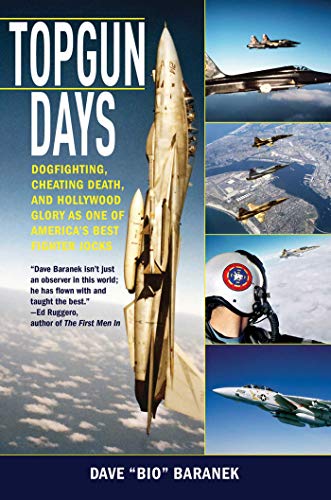
Topgun Days
by Dave Baranek
"Dogfighting, Cheating Death, and Hollywood Glory as One of America's Best Fighter Jocks"
Popularity
4.52 / 5
* A book's popularity is determined by how it compares to all other books on this website.
Where to buy?
Buy from Amazon* If you buy this book through the link above, we may receive a small commission at no extra cost to you.
Topgun Days by Dave Baranek
Details
War:
Vietnam War
Perspective:
Pilots
Military Unit:
US Navy
True Story:
Yes
Biography:
Yes
Region:
Asia
Page Count:
352
Published Date:
2014
ISBN13:
9781620878620
Summary
Topgun Days is a firsthand account by former Navy F-14 Tomcat Radar Intercept Officer Dave Baranek, who shares his experiences at the elite Navy Fighter Weapons School, known as Topgun. The memoir chronicles his career flying combat missions, training at the prestigious school, and later serving as a Topgun instructor. Baranek provides insider details about aerial combat tactics, the intense training environment, and the camaraderie among fighter crews. He also discusses his role as a technical advisor on the film Top Gun, offering readers a authentic glimpse into the world of naval aviation during the Cold War era.
Review of Topgun Days by Dave Baranek
Dave Baranek's "Topgun Days" offers readers an authentic glimpse into the world of elite naval aviation during the 1980s, a period when the legendary Fighter Weapons School was at the height of its Cold War mission. As a Radar Intercept Officer who earned the call sign "Bio," Baranek brings firsthand experience to his narrative, having flown in the back seat of F-14 Tomcats during some of the most intense training operations the Navy had to offer. His account stands apart from typical military memoirs by focusing squarely on the technical and tactical aspects of air combat while simultaneously capturing the culture and camaraderie that defined this elite community.
The book chronicles Baranek's journey through the rigorous Topgun program, where the nation's best fighter crews gather to refine their skills and learn to teach air combat tactics to fleet squadrons. Rather than presenting a sanitized or Hollywood-influenced version of events, Baranek provides detailed descriptions of the demanding training scenarios, the pressure of performing against highly skilled adversaries, and the constant analysis required to master the complex art of air-to-air combat. His role as a Radar Intercept Officer, responsible for operating the sophisticated weapons systems and providing tactical guidance to the pilot, receives particular attention throughout the narrative.
One of the memoir's strongest elements lies in its technical credibility. Baranek explains the intricacies of radar systems, weapons employment, and tactical decision-making without overwhelming readers who lack military aviation backgrounds. The F-14 Tomcat, with its swing-wing design and powerful radar system, serves as more than mere backdrop; it becomes a central character in the story. The author conveys both the capabilities and limitations of this formidable aircraft, offering insights into why certain tactics worked and others failed during training engagements.
The book also addresses Baranek's involvement with the production of the film "Top Gun," which brought unprecedented public attention to naval aviation and the Fighter Weapons School. His perspective as a technical advisor on the film provides interesting context about the challenges of translating real military operations into entertainment. While the movie took considerable creative liberties, Baranek's account clarifies which elements reflected actual procedures and which were modified for dramatic effect. This section of the book offers valuable perspective for readers familiar with the film who seek to understand the reality behind the Hollywood portrayal.
Throughout the narrative, Baranek maintains a measured tone that acknowledges both the extraordinary nature of his experiences and the very real dangers inherent in high-performance military aviation. The title's reference to "cheating death" reflects the genuine risks these aviators faced during training and operations. High-speed flight, challenging weather conditions, mechanical issues, and the unforgiving nature of carrier operations created an environment where mistakes could prove fatal. The author treats these dangers with appropriate gravity while avoiding melodrama.
The book succeeds in portraying the intense preparation required to become an effective fighter crew. Topgun students faced constant evaluation, with every flight debriefed in exhaustive detail. This process of continuous improvement, where even small tactical errors were identified and corrected, created an environment of professional excellence. Baranek's descriptions of these debriefs reveal the intellectual rigor underlying what might appear to outsiders as simple aerial combat.
The memoir also captures the unique culture of naval aviation during this era. The call signs, traditions, and tight-knit relationships among aircrew members receive attention without veering into excessive nostalgia. Baranek presents his fellow aviators as dedicated professionals who took their mission seriously while maintaining the humor and esprit de corps necessary to handle the stress of their demanding roles.
For readers interested in military aviation history, "Topgun Days" provides valuable documentation of a specific period in naval fighter aviation. The Cold War context, the technological capabilities of 1980s aircraft and weapons systems, and the tactical doctrines of the era all receive authentic treatment from someone who lived these experiences. The book serves as both personal memoir and historical record, preserving details about training methods and operational procedures that might otherwise be lost.
While the book focuses heavily on technical and tactical matters, it remains accessible to general readers. Baranek's writing style balances professional knowledge with clear explanation, making complex subjects understandable without sacrificing accuracy. The result is a memoir that satisfies both aviation enthusiasts seeking technical detail and general readers interested in military life and culture. "Topgun Days" stands as a solid contribution to the literature of naval aviation, offering an insider's perspective on one of the military's most prestigious training programs.

