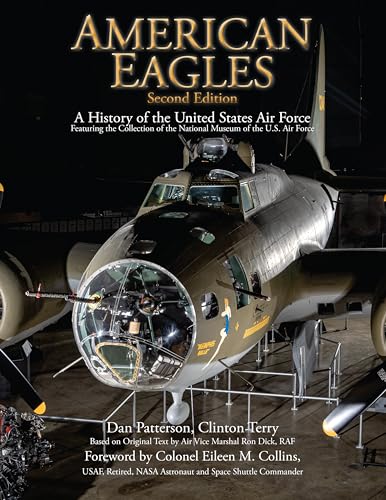
American Eagles
by
"A History of the United States Air Force Featuring the Collection of the National Museum of the U.S. Air Force"
Popularity
4.34 / 5
* A book's popularity is determined by how it compares to all other books on this website.
Where to buy?
Buy from Amazon* If you buy this book through the link above, we may receive a small commission at no extra cost to you.
American Eagles by
Details
Perspective:
Researcher
Military Unit:
US Air Force
True Story:
Yes
Biography:
No
Region:
North America
Published Date:
2025
ISBN13:
9781493092499
Summary
American Eagles presents a comprehensive visual history of the United States Air Force through the remarkable collection of the National Museum of the U.S. Air Force. Dan Patterson combines stunning photography with historical narrative to chronicle the evolution of American air power, from its early days through modern operations. The book showcases iconic aircraft, equipment, and artifacts while telling the stories of the airmen who served. It offers readers an accessible yet authoritative look at how the Air Force developed into a crucial component of American military strength and national defense.
Review of American Eagles by
Dan Patterson's "American Eagles: A History of the United States Air Force" stands as a comprehensive visual and narrative chronicle of American military aviation, drawing extensively from the impressive collection housed at the National Museum of the U.S. Air Force in Dayton, Ohio. This large-format volume combines Patterson's renowned aviation photography with historical context that spans from the earliest days of military flight through the modern era of stealth technology and precision warfare.
The book serves dual purposes as both a historical account and a photographic showcase. Patterson, an accomplished aviation photographer and author, brings his technical expertise and artistic eye to bear on one of the world's most significant collections of military aircraft. The National Museum of the U.S. Air Force, being the oldest and largest military aviation museum globally, provides an unparalleled resource for such a project, with its extensive array of aircraft, artifacts, and archival materials representing over a century of aerial warfare and innovation.
The narrative traces the evolution of American air power from its tentative beginnings in World War I, when the United States Army Signal Corps first employed aircraft in combat, through the establishment of the United States Air Force as an independent service branch in 1947. This organizational transformation, which separated air operations from the Army, marked a pivotal moment in military history and reflected the growing recognition of air superiority as a decisive factor in modern warfare. The book documents this journey through both text and imagery, providing readers with context for understanding how American military aviation developed into the technologically sophisticated force it represents today.
Patterson's photographic work captures the museum's aircraft collection with remarkable clarity and attention to detail. The images showcase not merely the external appearance of these historic machines but also reveal the craftsmanship, engineering, and design philosophy that characterized different eras of aviation development. From the fabric-covered biplanes of the early twentieth century to the sleek lines of jet-powered fighters and the imposing presence of strategic bombers, the photographs document the dramatic technological progression that occurred over decades of innovation and wartime necessity.
The book addresses major conflicts and technological milestones that shaped the Air Force's development. World War II receives substantial attention, as this global conflict accelerated aviation technology and demonstrated the strategic importance of air power in both tactical support and strategic bombing campaigns. The subsequent Cold War era brought jet propulsion, supersonic flight, and the development of nuclear-capable bombers and intercontinental ballistic missiles. These technological leaps transformed not only military capabilities but also the geopolitical landscape of the second half of the twentieth century.
The volume also examines the human dimension of Air Force history, acknowledging the pilots, crews, engineers, and support personnel whose contributions enabled American air operations across multiple theaters and conflicts. The stories behind specific aircraft and missions add depth to what might otherwise be simply a catalog of machines, reminding readers that these technological marvels were tools employed by individuals in service to their country, often under extraordinarily challenging and dangerous circumstances.
Patterson's access to the National Museum's collection provides opportunities to document aircraft that rarely appear in aviation literature. The museum's holdings include not only famous and widely recognized aircraft but also experimental designs, foreign aircraft acquired for evaluation, and examples of specialized equipment that played crucial supporting roles in air operations. This breadth of coverage offers readers a more complete picture of Air Force history than might be available through other sources focused solely on operational combat aircraft.
The production quality of the book reflects the significance of its subject matter. The large format allows Patterson's photographs to be displayed with impact, providing sufficient detail for aviation enthusiasts to appreciate the finer points of aircraft design and construction. The layout balances visual elements with explanatory text, making the book accessible to general readers while still offering substance for those with deeper knowledge of aviation history.
"American Eagles" functions effectively as both a coffee table volume and a reference work. Its visual appeal makes it suitable for casual browsing, while the historical information provides educational value for students of military history and aviation development. The book represents a collaboration between an accomplished photographer and a premier aviation museum, resulting in a volume that honors the history and heritage of the United States Air Force while making that history accessible to a broad audience. For those interested in military aviation, American military history, or the technological evolution of flight, this volume offers a substantial and visually impressive treatment of its subject.
