The 5 Best World War II POW Escape Books
Author: Editorial Staff
Our Superlatives
Find the best book quickly!
Quick Info
Getting out of a prison camp was only the beginning of an escape. A prisoner then needed food, shelter, a convincing explanation for being on the road, and some way to reach safety. Even an ingenious plan could fail through exhaustion, an unexpected encounter, or unfamiliar terrain. The most useful World War II POW escape books follow that uncertainty closely, showing both the preparation inside captivity and the difficult decisions that came after a fence or guard post had been passed.
This selection combines firsthand memoirs with biographies and narrative history. Frank Unwin's Escaping Has Ceased to be a Sport follows captivity and escape through his own recollections of Italy and Germany. Henry Langrehr's Whatever It Took connects an American paratrooper's service to imprisonment and a dangerous effort to regain freedom. Tom Carver's Where the Hell Have You Been? reconstructs Richard Carver's flight through occupied Italy and the help he received from civilians. Marc H. Stevens's Escape, Evasion and Revenge examines the repeated escape attempts of a German-Jewish RAF pilot, adding the danger of a concealed identity. Keith Warren Lloyd's The Great Desert Escape changes sides and setting with the 1944 breakout of German prisoners from a camp in Arizona.
Together, the books cover individual survival, organized planning, civilian assistance, and the search for escapees. They also resist a simple equation between an escape attempt and a successful return. Peter Stevens's repeated efforts did not bring him back to Britain before liberation, and the Arizona story makes recapture part of the narrative.
Choose according to the aspect that interests you most: a prisoner's voice, a family reconstruction, or a wider account of a mass breakout. These are true accounts, but their forms differ, and distinguishing a veteran's recollection from a later historian's narrative helps explain what each book can offer.
Quick Facts:
- Escaping a camp and reaching friendly territory were separate problems, often requiring different skills and resources.
- Twenty-five German prisoners escaped from a camp in Arizona in 1944, triggering a search across difficult desert terrain.
- Civilians could provide essential food, shelter, and guidance to escaped Allied prisoners in occupied Italy.
- A prisoner's nationality and concealed identity could add risks beyond those of ordinary military captivity.
- Repeated escape attempts did not necessarily lead to a return to friendly forces before the end of imprisonment.
Our Picks
In-depth look at each recommended title

Popularity:
4.51 / 5
* A book's popularity is determined by how it compares to all other books on this website.
Escaping Has Ceased to be a Sport: A Soldier's Memoir of Captivity and Escape in Italy and Germany
by Frank Unwin MBE
Frank Unwin recounts imprisonment and escape in Italy and Germany, with close attention to the practical work of seeking freedom.
Escaping Has Ceased to be a Sport by Frank Unwin offers the direct perspective of a prisoner remembering captivity and escape in Italy and Germany. The value of the memoir lies in the connection between the ordinary restrictions of camp life and the sustained effort required to get beyond them. Escape emerges as a practical undertaking with physical and psychological costs.
Unwin's attention to arrangements and logistics should appeal to readers who want more than a dramatic account of the moment of departure. Relationships between prisoners, the strain of confinement, and repeated efforts to regain control of events give the narrative its human setting. Those details help explain why determination alone could not solve every problem.
This is the selection for readers interested in a participant's recollections and the mechanics of escape. The detailed approach can slow the pace, especially if you prefer a tightly constructed modern narrative history. It also remains one soldier's experience rather than a survey of the POW system. Read it alongside the broader reconstructions here to compare remembered experience with a later author's organization of the story.
Popularity:
4.46 / 5
* A book's popularity is determined by how it compares to all other books on this website.
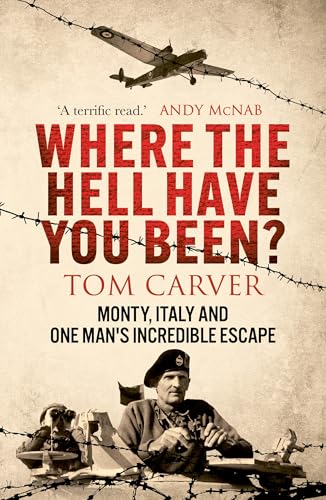
Where the Hell Have You Been?
by Tom Carver
Tom Carver reconstructs Richard Carver's escape from imprisonment and dangerous journey through German-occupied Italy.
Where the Hell Have You Been? by Tom Carver follows Richard Carver's capture, imprisonment in Italy, and escape through territory controlled by German forces. Its particular appeal is the period after leaving camp, when movement itself becomes a series of dangerous choices and the assistance of Italian civilians can determine whether an escaped prisoner survives.
The book is a reconstruction of another man's wartime experience, rather than a first-person POW memoir. That distinction matters to its shape: family history and the wider military setting help the author place the escape within a connected narrative. Richard's relationship to Bernard Montgomery adds another layer, but the central attraction remains the journey and the people who helped him.
Choose this account if you want evasion, civilian courage, and a strong narrative thread. Readers seeking a broad history of Italian camps or the Allied campaign will find a more individual story. In this selection, that focus is useful because it makes escape a problem of human relationships as well as routes and distances. It complements the camp-centered practical detail in Unwin's memoir.

Popularity:
4.34 / 5
* A book's popularity is determined by how it compares to all other books on this website.
The Great Desert Escape
by Keith Warren Lloyd
Keith Warren Lloyd follows the 1944 breakout of twenty-five German prisoners and the search that followed in the Arizona desert.
The Great Desert Escape by Keith Warren Lloyd gives this list a different geography and perspective. Its subject is the escape of twenty-five German prisoners from a POW camp in Arizona in 1944, followed by the effort to find and recapture them. A story often associated with Allied airmen in Europe becomes an episode on American soil.
The appeal is the combination of collective planning and the realities of the landscape outside the camp. Tunneling could create a route out, but it could not remove the problems of distance, exposure, and navigating unfamiliar country. Lloyd also follows the response, making the search part of the historical account rather than treating the breakout as the endpoint.
This is a narrative history, suited to readers interested in an organized escape and its wider consequences. Background detail can reduce the immediate pace, but it helps explain the American setting. The German viewpoint adds variety without requiring readers to identify the prisoners' military cause with Allied efforts. Choose it when you want to compare how circumstances shaped escape on different sides of the war.

Popularity:
4.24 / 5
* A book's popularity is determined by how it compares to all other books on this website.
Escape, Evasion and Revenge
by Marc H. Stevens
Marc H. Stevens traces a German-Jewish RAF pilot's captivity and repeated escape attempts, with identity adding a further layer of danger.
Escape, Evasion and Revenge by Marc H. Stevens follows Peter Stevens, a German-Jewish refugee who became an RAF pilot and later a prisoner of war. Written by his son, the book connects aviation service, concealed identity, captivity, and repeated efforts to escape. Those overlapping circumstances distinguish it from a story organized around a single tunnel or journey.
The most compelling question is what capture meant for someone whose personal background could expose him to additional danger. Escape attempts become part of a longer struggle over survival and identity, rather than a simple sequence leading to a triumphant homecoming. Stevens did not successfully return to Britain through escape before liberation, and that distinction is important when choosing the book.
Readers interested in biography and wartime identity should find the scope rewarding. Those seeking only a fast account of one successful breakout may prefer another title here. Its research-focused approach and wider life story provide the context for a different kind of POW narrative: repeated resistance under conditions where an unsuccessful attempt could still carry considerable personal significance.
Popularity:
4.85 / 5
* A book's popularity is determined by how it compares to all other books on this website.
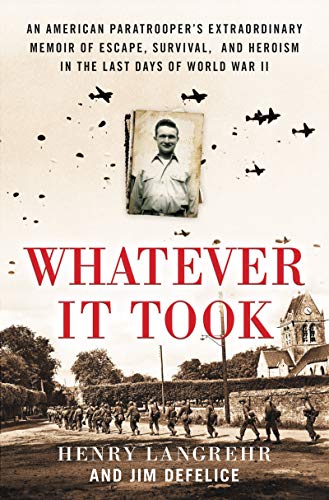
Whatever It Took
by Henry Langrehr
Henry Langrehr recounts the route from airborne combat to a German work camp and a perilous escape through wartime Europe.
Whatever It Took by Henry Langrehr brings an American serviceman's firsthand voice to the escape selection. His wartime story begins with the 82nd Airborne and the Normandy invasion, then moves through German capture, confinement in a work camp, and escape. The transition from fighting with a unit to struggling for freedom provides the narrative's central change of circumstances.
Its interest lies in the continuity between combat and captivity. Training and courage remain part of the story, but a prisoner also needs to make decisions in isolation, judge risk with limited information, and endure conditions he cannot control. Langrehr's recollections put those demands within one person's effort to survive the war.
Choose this memoir if you want a personal account that includes the battlefield background as well as the escape. It is less narrowly concerned with organized camp planning than some other books in the guide. Recalled late in the author's life, the narrative should be read as remembered testimony rather than a complete record of every surrounding event. It offers a useful contrast with the biographical and collective escape histories elsewhere in the selection.