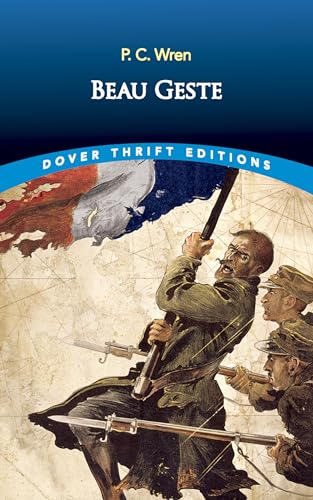
Beau Geste
by Percival Christopher Wren
Popularity
3.89 / 5
* A book's popularity is determined by how it compares to all other books on this website.
Where to buy?
Buy from Amazon* If you buy this book through the link above, we may receive a small commission at no extra cost to you.
Beau Geste by Percival Christopher Wren
Details
Military Unit:
French Foreign Legion
Biography:
No
Page Count:
355
Published Date:
2025
ISBN13:
9780486856223
Summary
Beau Geste follows three devoted English brothers who mysteriously enlist in the French Foreign Legion after a valuable sapphire disappears from their family estate. The eldest, Michael "Beau" Geste, takes the blame to protect his beloved aunt. The story follows their harsh experiences in the brutal North African desert, where they face sadistic officers, desert warfare, and fort sieges. Through flashbacks and multiple narrators, the novel reveals the truth behind the jewel theft while exploring themes of honor, sacrifice, and brotherhood. This adventure tale combines mystery, military action, and family loyalty in an exotic colonial setting.
Review of Beau Geste by Percival Christopher Wren
Percival Christopher Wren's "Beau Geste" stands as one of the most celebrated adventure novels of the early twentieth century, first published in 1924. The novel tells the story of the three Geste brothers—Beau, John, and Digby—who flee their comfortable English home to join the French Foreign Legion, setting in motion a tale of mystery, honor, and survival in the harsh deserts of North Africa.
The novel opens with one of literature's most compelling mysteries: a relief column arrives at Fort Zinderneuf in the Sahara to find the ramparts manned by dead soldiers, each propped at his post as if still defending the fort. This striking image immediately establishes the atmosphere of the novel and sets up the narrative structure that will unfold through flashbacks and multiple perspectives. The story then moves backward to explain how the Geste brothers came to be in the Legion and what led to the eerie scene at the fort.
At the heart of the narrative lies the theft of a valuable sapphire known as the "Blue Water" from the estate of Lady Brandon, the boys' guardian. The mystery surrounding this theft and the brothers' subsequent flight to join the Foreign Legion provides the central tension that drives much of the plot. Wren skillfully maintains suspense about the true circumstances of the theft throughout much of the novel, revealing information gradually as the story progresses.
The character of Michael "Beau" Geste himself embodies the ideals of courage, self-sacrifice, and unwavering honor that were particularly celebrated in adventure fiction of this era. His nobility and willingness to sacrifice himself for others define not only his character but also the moral universe of the novel. The relationship between the three brothers forms the emotional core of the story, with their loyalty to one another tested repeatedly by the brutal conditions of Foreign Legion service.
Wren's depiction of life in the French Foreign Legion is both romanticized and brutal. The novel presents the Legion as a refuge for men escaping their pasts, a place where questions are not asked and identities can be shed. The training sequences, the harsh discipline, and the daily struggles of Legion life receive detailed attention. The brutality of Sergeant Lejaune, the sadistic officer who torments the men under his command, provides a counterpoint to the nobility of the Geste brothers and creates much of the novel's conflict.
The desert setting plays a crucial role in the novel's atmosphere. Wren's descriptions of the Sahara emphasize its vastness, its beauty, and its deadly nature. The harsh environment becomes almost a character in itself, testing the endurance and resolve of the legionnaires. The isolated forts, surrounded by hostile terrain and potentially hostile tribes, create a sense of claustrophobia despite the endless expanse of sand.
The novel's treatment of colonialism and its depiction of North African peoples reflect the attitudes and assumptions common to British adventure fiction of the 1920s. Modern readers will note the dated perspectives and stereotypes that appear throughout the narrative. These elements are historically significant as they reveal the worldview of the era in which the book was written, though they may make portions of the text uncomfortable for contemporary audiences.
Wren's prose style is straightforward and accessible, prioritizing plot momentum and clear storytelling over literary experimentation. The narrative moves briskly, shifting between timelines and perspectives with relative ease. Dialogue tends toward the formal and somewhat stilted by contemporary standards, but it serves to reinforce the codes of honor and duty that govern the characters' behavior.
The novel's structure, with its frame narrative and extended flashbacks, allows Wren to maintain mystery and suspense while also developing character relationships and backstory. The technique of beginning with the mysterious tableau at Fort Zinderneuf and then explaining how events reached that point proves effective in maintaining reader engagement throughout the novel's considerable length.
"Beau Geste" achieved enormous popular success upon publication and spawned multiple film adaptations, most notably the 1939 version starring Gary Cooper. The novel's influence on subsequent adventure fiction, particularly stories set in exotic locales featuring themes of honor and male bonding, has been substantial. It established many conventions that would become standard in Foreign Legion fiction and desert adventure stories.
The book's themes of honor, sacrifice, and loyalty continue to resonate, even as other aspects of the novel feel firmly rooted in its time period. The mystery element provides genuine intrigue, and the action sequences maintain tension effectively. For readers interested in classic adventure fiction or the history of popular literature, "Beau Geste" remains a significant and entertaining work that captures the spirit of its era while delivering a compelling story of brotherhood and heroism under extreme circumstances.


