Close Up
by Dennis Fisher
"A Marine Combat Photographer in Vietnam"
Popularity
4.94 / 5
* A book's popularity is determined by how it compares to all other books on this website.
Where to buy?
Buy from Amazon* If you buy this book through the link above, we may receive a small commission at no extra cost to you.
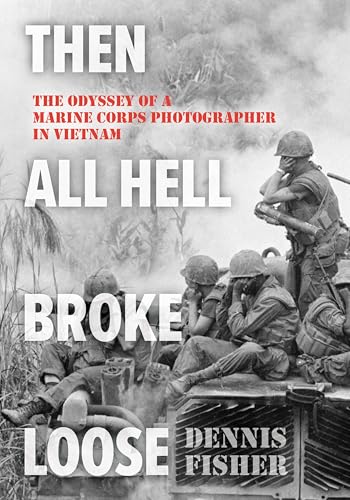
Close Up by Dennis Fisher
Details
War:
Vietnam War
Perspective:
War Correspondents
Military Unit:
US Marine Corps
True Story:
Yes
Biography:
Yes
Region:
Asia
Published Date:
2026
ISBN13:
9780811777605
Summary
Dennis Fisher's firsthand account chronicles his experiences as a U.S. Marine Corps combat photographer during the Vietnam War. The book details his deployment and the dangerous missions he undertook to document the war through his camera lens. Fisher provides an intimate perspective on the realities of combat, capturing both the brutality of warfare and the camaraderie among Marines. Through his narrative, readers gain insight into the unique role of military photographers who risked their lives to create a visual record of one of America's most controversial conflicts.
Review of Close Up by Dennis Fisher
Dennis Fisher's memoir offers a visceral and deeply personal account of his experiences as a Marine Corps combat photographer during the Vietnam War. The book stands as both a historical document and a compelling narrative that captures the chaos, brutality, and moral complexity of one of America's most controversial conflicts. Fisher's dual role as both participant and documentarian provides readers with a unique perspective that few Vietnam War memoirs can match.
The title itself serves as an apt metaphor for Fisher's journey through Vietnam. His odyssey begins with the relatively straightforward mission of documenting Marine Corps operations for public relations purposes but quickly evolves into something far more profound and harrowing. Fisher arrived in Vietnam with camera equipment and training, but nothing could have prepared him for the reality of combat photography in a war zone where the front lines were everywhere and nowhere at once.
Fisher's account distinguishes itself through its unflinching honesty about the nature of combat and the photographer's role within it. Unlike traditional combat photographers who might remain somewhat removed from the action, Fisher found himself repeatedly in the thick of fighting, his camera serving as both professional tool and psychological shield. The memoir details numerous firefights, ambushes, and operations where Fisher had to make split-second decisions about whether to document events or participate directly in combat. This tension between observer and participant runs throughout the narrative, raising questions about the ethics and responsibilities of war photography that remain relevant today.
The writing style reflects Fisher's background as a visual storyteller. His prose is direct and descriptive, painting vivid pictures of the Vietnamese landscape, the Marines he served alongside, and the often surreal nature of warfare. He captures the sensory overload of combat—the oppressive heat and humidity, the smell of gunpowder and decay, the constant vigilance required to survive in an environment where danger could materialize at any moment. These details ground the narrative in authentic experience rather than abstract reflection.
One of the memoir's strengths lies in its portrayal of the bonds formed between Marines under combat conditions. Fisher introduces readers to a cast of memorable characters, from squad leaders to fellow photographers, each contributing to his understanding of war and survival. These relationships provide emotional weight to the narrative, as Fisher chronicles not just military operations but also the human cost of conflict. The losses he experienced and witnessed left indelible marks, and the book does not shy away from exploring grief, guilt, and the psychological toll of extended combat exposure.
Fisher also addresses the unique challenges faced by combat photographers in Vietnam. Unlike World War II or Korea, where photographers often had clearer mandates and more defined battlefields, Vietnam's guerrilla warfare and shifting objectives complicated the task of visual documentation. Fisher grapples with questions about what images to capture, how to represent the war honestly while serving military interests, and the weight of turning human suffering into photographic subjects. These ethical considerations add depth to what could have been a straightforward war memoir.
The book provides valuable historical context about Marine Corps operations in Vietnam, including major campaigns and the evolution of American strategy throughout the war. Fisher's ground-level perspective complements broader historical narratives, showing how policy decisions translated into daily realities for those fighting the war. His observations about the growing disillusionment among troops, the challenges of fighting an enemy that blended into the civilian population, and the frustrations of a war with unclear objectives contribute to understanding why Vietnam became such a divisive conflict.
Fisher's post-war struggles receive attention as well, though perhaps not as extensively as some readers might wish. The transition from combat zone to civilian life, the difficulty of processing traumatic experiences, and the challenge of finding meaning in what he witnessed all receive discussion. This inclusion acknowledges that the odyssey of the title extended beyond Vietnam itself, encompassing the long journey toward coming to terms with wartime experiences.
The memoir serves multiple audiences effectively. Veterans may find validation in Fisher's honest portrayal of combat's realities and aftermath. History enthusiasts gain access to a first-person account that illuminates aspects of the Vietnam War often overlooked in broader historical treatments. Photography students and professionals can examine the ethical and practical dimensions of conflict documentation through Fisher's experiences and reflections.
This book represents an important contribution to Vietnam War literature, offering perspectives that blend the immediacy of combat memoir with the contemplative distance of someone who has had decades to process extremely intense experiences. Fisher's role as photographer gave him a unique vantage point, and his willingness to share both the external events and internal struggles makes this memoir a valuable historical and human document.