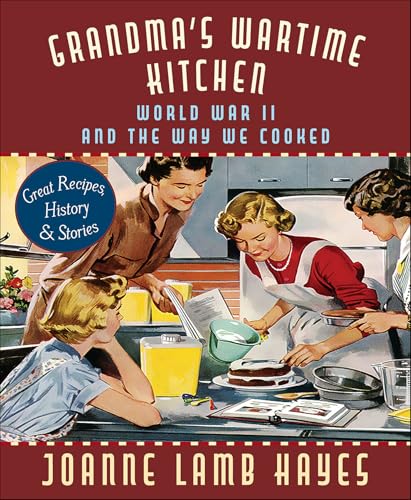
Grandma's Wartime Kitchen
by Joanne Lamb Hayes
"World War II and the Way We Cooked"
Popularity
4.93 / 5
* A book's popularity is determined by how it compares to all other books on this website.
Where to buy?
Buy from Amazon* If you buy this book through the link above, we may receive a small commission at no extra cost to you.
Grandma's Wartime Kitchen by Joanne Lamb Hayes
Details
War:
World War II
Perspective:
Civilian
True Story:
Yes
Biography:
No
Region:
North America
Page Count:
417
Published Date:
2019
ISBN13:
9781648374692
Summary
Grandmas Wartime Kitchen World War II and the Way We Cooked by Joanne Lamb Hayes explores American home cooking during World War II. The book examines how rationing, food shortages, and government campaigns transformed everyday meals and kitchen practices. Hayes provides historical context about wartime food restrictions while sharing period recipes, cooking techniques, and creative substitutions that homemakers used to feed their families despite limited resources. The book offers a nostalgic look at Depression era and wartime culinary ingenuity, documenting how American cooks adapted to challenges on the home front through practical solutions and resourceful meal preparation.
Review of Grandma's Wartime Kitchen by Joanne Lamb Hayes
Joanne Lamb Hayes brings a unique perspective to World War II history by examining the domestic front through the lens of food rationing and home cooking. Grandma's Wartime Kitchen offers readers an intimate look at how American families adapted their daily meals during a period of unprecedented scarcity and sacrifice. Rather than focusing on battles and military strategy, this book explores the culinary challenges faced by ordinary citizens who had to feed their families while supporting the war effort through conservation and rationing programs.
The book serves as both a historical document and a practical cookbook, combining period recipes with contextual information about wartime restrictions. Hayes draws upon the experiences of the generation that lived through the war years, documenting how homemakers stretched ingredients, substituted unavailable items, and created satisfying meals despite severe limitations on sugar, butter, meat, and other staples. This approach transforms what could have been a dry recounting of rationing policies into a vivid portrait of American resilience and creativity during wartime.
One of the book's strongest elements is its attention to the practical realities of wartime cooking. The recipes included reflect the actual constraints faced by home cooks during the 1940s, offering modern readers authentic examples of how meals were prepared when ingredients were scarce. These dishes demonstrate the ingenuity required to maintain variety and nutrition while adhering to government-mandated rationing systems. The book does not romanticize this era but instead presents an honest view of the challenges and frustrations that accompanied everyday meal preparation during the war years.
Hayes provides valuable historical context throughout the book, explaining how rationing systems worked and why certain items became scarce. The text explores the relationship between home front sacrifices and military needs, helping readers understand the direct connection between kitchen conservation and supporting troops overseas. This educational component elevates the book beyond a simple recipe collection, offering insights into the broader social and economic impacts of World War II on American domestic life.
The recipes themselves span the range of wartime cooking, from main dishes to desserts, all adapted to work within rationing restrictions. Many utilize substitutions that would have been common during the period, such as using corn syrup or honey when sugar was rationed, or employing vegetable shortening when butter was unavailable. These adaptations provide a tangible sense of how cooks modified traditional recipes to accommodate wartime limitations. The book captures the spirit of making do with what was available, a philosophy that defined home cooking throughout the war years.
Beyond the practical aspects of cooking, the book touches on the cultural and social dimensions of wartime food culture. It examines how government campaigns encouraged citizens to plant victory gardens, preserve food, and avoid waste. The text also explores the role of community cookbooks and newspaper columns in sharing tips and recipes among homemakers facing similar challenges. This broader view helps readers appreciate how food rationing affected not just individual households but entire communities.
The book's nostalgic appeal is balanced by its educational value. While it evokes memories for those who lived through the era or heard stories from family members, it also serves as a resource for understanding a specific chapter in American history. The combination of recipes and historical information makes it accessible to readers with varying interests, whether they approach it as a cookbook, a history book, or both.
Hayes succeeds in preserving knowledge that might otherwise be lost as the World War II generation passes. The recipes and techniques documented in this book represent practical wisdom developed during a unique historical moment. By recording these culinary practices, the author has created a resource that honors the experiences of wartime homemakers while offering contemporary readers a window into daily life during the 1940s.
Grandma's Wartime Kitchen fills a specific niche in both culinary and historical literature. It demonstrates how examining everyday activities like cooking can reveal important aspects of how people lived during significant historical events. The book reminds readers that history encompasses not just major battles and political decisions but also the small daily adjustments made by ordinary people. Through its focus on wartime cooking, it offers a distinctive perspective on American resilience and adaptability during World War II, making it a worthwhile addition to the literature on this pivotal period in American history.


