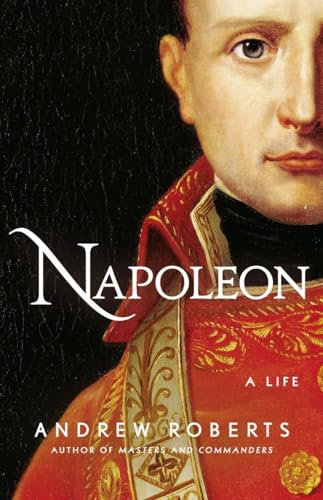
Napoleon: Life, Legacy, and Image: A Biography
by Alan Forrest
Popularity
4.43 / 5
* A book's popularity is determined by how it compares to all other books on this website.
Where to buy?
Buy from Amazon* If you buy this book through the link above, we may receive a small commission at no extra cost to you.
Napoleon: Life, Legacy, and Image: A Biography by Alan Forrest
Details
War:
Napoleonic Wars
Perspective:
Commanders
True Story:
Yes
Biography:
Yes
Region:
Europe
Published Date:
2013
ISBN13:
9781250038357
Summary
This comprehensive biography examines Napoleon Bonaparte's life from his Corsican origins through his military campaigns, political reign, and eventual exile. Forrest analyzes how Napoleon transformed France and Europe through revolutionary warfare, legal reforms, and imperial ambition. The book explores not just historical events but also Napoleon's enduring legacy and how his image has been constructed and reconstructed over time. It offers a balanced assessment of both Napoleon's achievements and the human costs of his ambitions, making it accessible to general readers while maintaining scholarly rigor.
Review of Napoleon: Life, Legacy, and Image: A Biography by Alan Forrest
Alan Forrest's comprehensive biography of Napoleon Bonaparte stands as a significant contribution to Napoleonic scholarship, offering readers a thoroughly researched examination of one of history's most compelling figures. Forrest, an established historian specializing in the Revolutionary and Napoleonic periods, brings decades of expertise to this work, presenting Napoleon not merely as a military commander but as a complex individual whose influence extended far beyond the battlefield.
The biography distinguishes itself through its tripartite approach, examining Napoleon's life, legacy, and image as interconnected elements that together form a complete portrait. This structure allows Forrest to move beyond conventional chronological narrative, exploring how Napoleon crafted his own mythology while simultaneously analyzing the historical reality behind the legend. The author demonstrates how Napoleon consciously shaped his public persona, understanding the power of propaganda and image management long before such concepts became formalized in political strategy.
Forrest's treatment of Napoleon's early years in Corsica and his rise through the ranks of the Revolutionary army provides essential context for understanding the emperor's later actions and decisions. The biography traces how a young artillery officer from a minor Corsican family navigated the chaotic years of the French Revolution, seizing opportunities that would have been unthinkable under the ancien régime. This section effectively illustrates how Revolutionary ideals and personal ambition intertwined in Napoleon's character, creating a leader who could simultaneously champion meritocracy while establishing an imperial dynasty.
The military campaigns receive thorough attention, though Forrest avoids getting bogged down in tactical minutiae that might alienate general readers. Instead, the focus remains on the broader strategic vision and the political implications of military success and failure. The Italian campaigns, the Egyptian expedition, Austerlitz, and the disasters in Spain and Russia all receive balanced treatment. Forrest examines how military victory enabled political consolidation while also noting the human costs of Napoleon's ambitions, including the hundreds of thousands who died in his wars.
Particularly valuable is Forrest's analysis of Napoleon as an administrator and state-builder. The Napoleonic Code, the reorganization of French education, the establishment of the Bank of France, and the Concordat with the Catholic Church all receive attention as lasting achievements that outlived the empire itself. These domestic reforms demonstrate Napoleon's recognition that military conquest required institutional foundations to create lasting change. The biography shows how Napoleon's administrative genius helped modernize France and influenced legal and governmental systems across Europe.
The treatment of Napoleon's legacy proves especially nuanced. Forrest explores how different groups and nations have interpreted Napoleon's impact, from those who see him as a champion of Revolutionary principles to those who view him as a tyrant responsible for devastating wars. The author examines how Napoleon's legend evolved during his lifetime and continued to develop after his death, becoming a touchstone for various political movements and ideologies throughout the nineteenth and twentieth centuries.
The question of image occupies a central place in the biography, with Forrest analyzing how Napoleon understood and manipulated visual representation. From carefully staged paintings to official bulletins describing his victories, Napoleon recognized that controlling his image was crucial to maintaining power. The biography examines how artists like Jacques-Louis David helped create an iconography of Napoleonic grandeur, while also noting the counter-images produced by enemies who depicted him as a warmonger and despot.
Forrest draws on extensive primary sources, including letters, official documents, and contemporary accounts, to support his interpretations. The research is evident throughout, yet the writing remains accessible to readers without specialized knowledge of the period. The author successfully balances scholarly rigor with narrative clarity, making complex political and military developments understandable without oversimplification.
The biography also addresses controversial aspects of Napoleon's career, including the reinstitution of slavery in French colonies, the brutal suppression of resistance in occupied territories, and the authoritarian nature of his rule. Forrest neither demonizes nor lionizes his subject, instead presenting a figure whose extraordinary talents coexisted with significant moral failings and whose historical impact remains deeply ambiguous.
This work serves as an excellent resource for anyone seeking to understand Napoleon's enduring fascination and his profound impact on European history. Forrest's balanced approach, combining biographical detail with analysis of legacy and image, creates a multidimensional portrait that helps explain why Napoleon remains a subject of intense interest more than two centuries after his death.