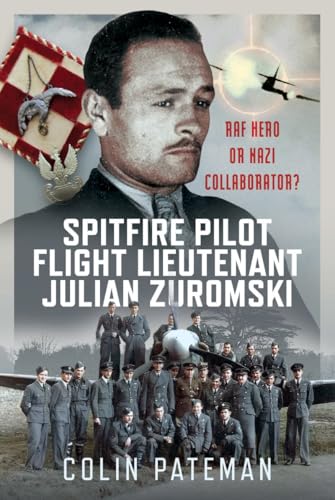
Spitfire Pilot Flight Lieutenant Julian Zuromski
by Colin Pateman
"RAF Hero Or Nazi Collaborator?"
Popularity
2.32 / 5
* A book's popularity is determined by how it compares to all other books on this website.
Where to buy?
Buy from Amazon* If you buy this book through the link above, we may receive a small commission at no extra cost to you.
Spitfire Pilot Flight Lieutenant Julian Zuromski by Colin Pateman
Details
War:
World War II
Perspective:
Pilots
Military Unit:
Royal Air Force
True Story:
Yes
Biography:
Yes
Region:
Europe
Published Date:
2025
ISBN13:
9781036133214
Summary
This book examines the controversial wartime career of Julian Zuromski, a Polish Spitfire pilot who served with the RAF during World War II. Author Colin Pateman investigates the conflicting narratives surrounding Zuromski's service, exploring whether he was a heroic fighter pilot defending Britain or whether allegations of Nazi collaboration hold merit. The work delves into wartime records, testimonies, and historical evidence to present a balanced examination of this disputed figure, raising questions about loyalty, nationality, and the complexities of wartime allegiances during one of history's most turbulent periods.
Review of Spitfire Pilot Flight Lieutenant Julian Zuromski by Colin Pateman
Colin Pateman's biographical work examines the controversial wartime career of Julian Zuromski, a Polish pilot who flew Spitfires for the Royal Air Force during World War II. The book delves into one of the more complex and morally ambiguous stories to emerge from the conflict, challenging readers to consider the difficult circumstances faced by servicemen caught between competing allegiances and survival.
Zuromski's story represents a particularly thorny chapter in the history of Polish airmen who served with the RAF. Like many Polish pilots, he fled his homeland following the German and Soviet invasions of 1939, eventually making his way to Britain where he joined the ranks of those defending against the Luftwaffe. The Polish contribution to the Battle of Britain and subsequent air operations was substantial, with Polish squadrons earning distinguished service records throughout the war.
The central question posed by the book's subtitle reflects the ongoing debate surrounding Zuromski's actions and motivations. Pateman explores the circumstances that led to accusations of collaboration, examining evidence and testimonies that paint a complicated picture of a man operating under extraordinary pressures. The book does not shy away from the difficult questions surrounding loyalty, coercion, and the gray areas that existed during wartime.
The narrative traces Zuromski's journey from his early days as a fighter pilot through the events that would later cast a shadow over his service record. Pateman provides context about the broader experience of Polish airmen in the RAF, many of whom faced uncertain futures even as they fought for the Allied cause. The Polish government-in-exile in London represented a nation that no longer existed in its pre-war form, and the eventual Soviet domination of Poland meant that many Polish servicemen could never safely return home.
The book examines the specific incidents and allegations that led to questions about Zuromski's conduct. Without sensationalizing the material, Pateman presents the available evidence and allows readers to understand the complexity of judging wartime behavior decades after the fact. The circumstances surrounding accusations of collaboration often involved life-or-death decisions, intelligence operations, and situations where clear-cut moral choices were rarely available.
One of the strengths of this work lies in its attention to the historical context surrounding Polish military personnel during and after World War II. The fate of Poland itself remained uncertain throughout the conflict, and the eventual outcome saw the country fall under Soviet influence rather than regaining true independence. This reality profoundly affected Polish servicemen who had fought alongside the Western Allies, many of whom faced impossible choices about their futures.
Pateman's research draws upon available documentary evidence, military records, and historical accounts to construct a narrative that acknowledges the limitations of what can be definitively known. The passage of time and the destruction or classification of wartime records means that some questions may never be fully answered. The book recognizes these limitations while still providing readers with a thorough examination of what can be established.
The broader implications of Zuromski's story extend beyond one individual's experience. The book touches upon themes of national identity, the meaning of loyalty when one's nation is occupied, and the difficult position of exile forces fighting far from home. These themes resonated throughout the Polish armed forces serving under British command and continued to affect Polish veterans long after the war ended.
For readers interested in World War II aviation history, the book offers insights into the operational aspects of RAF fighter squadrons and the daily realities faced by Spitfire pilots. The technical and tactical elements of aerial combat feature alongside the personal story, providing a rounded picture of what it meant to serve as a fighter pilot during this period.
The question mark in the title signals Pateman's approach to his subject matter. Rather than delivering definitive judgments, the book presents the available information and allows readers to grapple with the ambiguities inherent in the story. This measured approach serves the material well, acknowledging that historical truth is often more complex than simple categorizations of hero or traitor might suggest.
The work contributes to the growing body of literature examining the experiences of Polish military personnel during World War II, a topic that has received increased attention in recent decades. As more records have become accessible and as historical perspectives have evolved, researchers have been able to explore previously overlooked or suppressed aspects of the Polish wartime experience.
Colin Pateman's examination of Julian Zuromski's career offers readers a thought-provoking case study in the complexities of wartime service and the challenges of historical judgment. The book serves as a reminder that the experiences of individuals during World War II often defied simple narratives and that understanding the past requires grappling with uncomfortable ambiguities and competing claims about truth and loyalty.


