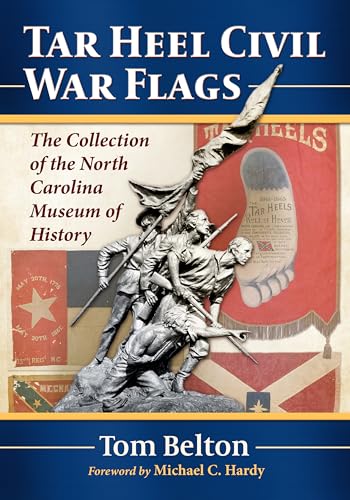
Tar Heel Civil War Flags
by Tom Belton
"The Collection of the North Carolina Museum of History"
Popularity
4.34 / 5
* A book's popularity is determined by how it compares to all other books on this website.
Where to buy?
Buy from Amazon* If you buy this book through the link above, we may receive a small commission at no extra cost to you.
Tar Heel Civil War Flags by Tom Belton
Details
War:
American Civil War
Perspective:
Researcher
True Story:
Yes
Biography:
No
Region:
North America
Published Date:
2025
ISBN13:
9781476696492
Summary
This book documents and showcases the collection of Civil War battle flags from North Carolina housed at the North Carolina Museum of History. Written by Tom Belton, it provides detailed information about these historic Confederate and Union flags carried by North Carolina regiments during the Civil War. The work serves as both a historical reference and visual catalog, preserving the stories and significance of these military banners. It offers insights into North Carolina's role in the Civil War through the examination of these artifacts and their connections to specific units and battles.
Review of Tar Heel Civil War Flags by Tom Belton
Tom Belton's examination of Civil War flags housed in the North Carolina Museum of History stands as an essential reference work for anyone interested in Confederate military history, Southern heritage, or Civil War material culture. This volume documents one of the most comprehensive collections of North Carolina regimental flags from the 1861-1865 conflict, providing readers with detailed visual and historical records of these significant artifacts.
The collection featured in this work represents flags carried by North Carolina regiments throughout the Civil War, making it particularly valuable for researchers and enthusiasts focused on the state's military contributions during this period. North Carolina provided more troops to the Confederate cause than any other Southern state, and the flags documented here served as rallying points for these units through numerous campaigns and battles across multiple theaters of war.
Belton approaches his subject matter with the meticulous attention required for such historical documentation. The flags themselves serve as primary source material, offering physical evidence of military organization, unit pride, and the material realities of Civil War service. Many of these banners show the wear of campaign life, with battle damage, weathering, and repairs telling their own stories about the experiences of the soldiers who carried them into combat.
The North Carolina Museum of History's collection includes flags from various periods of the war and represents different flag patterns used by Confederate forces. These range from early war designs to later patterns, illustrating the evolution of Confederate military standards throughout the conflict. The documentation of these variations provides valuable information for understanding how flag designs changed in response to practical battlefield needs and manufacturing capabilities.
For genealogists and family historians, this work offers particular value. The connection between specific regiments and their flags allows researchers to better understand the units in which their ancestors served. The visual documentation helps bring historical records to life, transforming roster listings and service records into more tangible connections with the past.
The preservation challenges associated with Civil War textiles make this documentation especially important. Flags from this era suffer from inherent vice due to the materials and dyes used in their construction, and many continue to deteriorate despite best conservation efforts. Belton's work creates a permanent record of these artifacts in their current state, ensuring that even if physical deterioration continues, the historical information they contain remains accessible to future generations.
Museum professionals and conservators will find this volume useful as a case study in textile preservation and documentation. The photographs and descriptions provide insight into the condition issues common to Civil War flags and the types of damage these artifacts have sustained over more than 150 years. This information contributes to broader conversations about best practices in preserving military textiles.
Civil War reenactors and living history interpreters often consult works like this to ensure historical accuracy in their reproductions. The detailed visual documentation allows for precise replication of flag designs, including specific details of construction, dimensions, and color that might otherwise be lost or incorrectly interpreted from written descriptions alone.
The flags documented in this collection saw service at many of the war's most significant engagements. North Carolina troops participated in major Eastern Theater battles including Gettysburg, Antietam, and the Wilderness Campaign, as well as actions in the Western Theater. The flags represent units that experienced the full spectrum of Civil War military life, from early enthusiasm through the grinding attrition of later campaigns.
Art historians and students of American material culture will appreciate how these flags reflect 19th-century textile production, design aesthetics, and symbolism. The banners combine practical military necessity with decorative elements, showing how functional objects could also serve ceremonial and morale-building purposes within military organizations.
This work contributes to the broader field of vexillology, the study of flags, by providing detailed documentation of a specific subset of Civil War banners. The information compiled here supports comparative studies with flags from other states and other conflicts, helping researchers understand regional variations and broader patterns in military flag design and use.
Educational institutions, particularly those in North Carolina, will find this volume valuable for teaching state history and the Civil War era. The flags provide concrete, visual entry points for discussing abstract historical concepts, making them effective teaching tools for engaging students with this period of American history.
Belton's documentation serves multiple audiences simultaneously, from academic researchers to casual history enthusiasts, making it a versatile addition to any Civil War library. The work represents careful scholarship applied to material culture, demonstrating how physical artifacts can illuminate historical understanding when properly documented and contextualized.