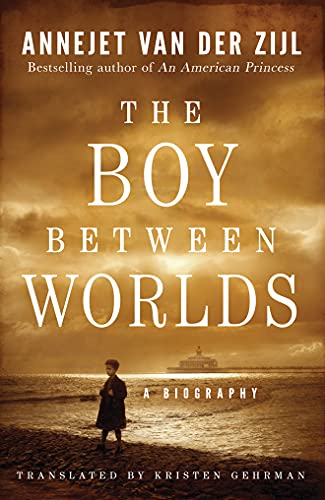
The Boy Between Worlds
by Annejet van der Zijl
"A Biography"
Popularity
4.25 / 5
* A book's popularity is determined by how it compares to all other books on this website.
Where to buy?
Buy from Amazon* If you buy this book through the link above, we may receive a small commission at no extra cost to you.
The Boy Between Worlds by Annejet van der Zijl
Details
Perspective:
Civilian
True Story:
Yes
Biography:
Yes
Published Date:
2019
ISBN13:
9781542007313
Summary
The Boy Between Worlds tells the true story of Waldemar Nods, a Black Surinamese student who came to the Netherlands in the 1920s, and his romance with Rika, a white Dutch woman. Set against the backdrop of World War II and Nazi occupation, the biography chronicles their forbidden interracial relationship and the tragic consequences they faced. Dutch historian Annejet van der Zijl meticulously reconstructs this forgotten story, exploring themes of love, racism, colonialism, and survival during one of history's darkest periods. The book illuminates an overlooked chapter of Dutch colonial history and wartime persecution.
Review of The Boy Between Worlds by Annejet van der Zijl
Annejet van der Zijl has built a reputation as one of the Netherlands' most accomplished narrative biographers, known for uncovering forgotten lives that intersect with larger historical currents. In "The Boy Between Worlds," she turns her attention to a story that spans continents and challenges easy categorization, tracing the life of a young man caught between different cultures, expectations, and identities during a period of significant social upheaval.
Van der Zijl's approach to biography has always favored the personal over the purely factual, and this book is no exception. Rather than presenting a dry chronological account, she weaves together documented history with a novelist's sensitivity to character and atmosphere. This technique allows readers to understand not just what happened to her subject, but why those events carried the emotional weight they did. The result is a book that reads with the pacing of fiction while remaining grounded in historical research.
The central figure of the biography exists at an intersection of worlds that rarely receive sustained literary attention. His story illuminates the complexities faced by individuals who do not fit neatly into the racial, national, or social categories that dominated their era. Van der Zijl handles this material with evident care, avoiding both sentimentality and clinical detachment. She allows the contradictions and difficulties of her subject's position to emerge naturally through the narrative rather than through explicit commentary or moralizing.
One of the book's strengths lies in its attention to context. Van der Zijl does not simply tell the story of one individual; she situates that individual within the broader currents of colonial history, migration, and the shifting social hierarchies of the twentieth century. This contextual grounding helps readers understand the pressures and constraints that shaped the protagonist's choices, without reducing him to a mere symbol or case study. He remains, throughout the book, a specific person with particular hopes, disappointments, and relationships.
The prose itself deserves mention. Van der Zijl writes with a clarity that makes complex historical circumstances accessible without oversimplifying them. Her sentences move efficiently, and she resists the temptation to over-explain or editorialize. This restraint gives the material room to breathe and allows readers to draw their own conclusions about the moral and historical questions the story raises. At the same time, her prose carries an undercurrent of empathy that never tips into sentimentality.
Structurally, the biography benefits from Van der Zijl's skill in pacing. She knows when to linger on a formative moment and when to move the narrative forward efficiently. This balance keeps the book engaging throughout, even during sections that deal with more procedural or documentary material. Readers unfamiliar with the historical period covered will find enough background woven into the narrative to follow along without feeling lost, while those with more knowledge of the era will appreciate the nuance Van der Zijl brings to familiar historical dynamics.
What ultimately distinguishes this biography is its refusal to flatten its subject into a simple narrative of victimhood or triumph. The protagonist's life, as rendered here, contains genuine complexity: moments of agency alongside moments of powerlessness, connection alongside isolation. Van der Zijl trusts her readers to hold these contradictions without needing them resolved into a tidy moral lesson.
The book fits comfortably within Van der Zijl's broader body of work, which has consistently sought out individuals whose lives reveal something significant about the historical forces shaping their time. Her previous biographies have demonstrated a similar commitment to research paired with narrative craft, and this book continues that tradition. Readers who have appreciated her earlier work will find familiar strengths here: meticulous attention to detail, a sympathetic but unsentimental narrative voice, and an ability to make historical figures feel immediate and real.
For readers interested in biography as a genre, particularly biographies that grapple with questions of identity, belonging, and historical displacement, this book offers a rewarding and thoughtfully constructed account. It succeeds both as a piece of historical documentation and as a compelling human story, a combination that is more difficult to achieve than it might appear.