The Flag Maker
by Susan Campbell Bartoletti
Popularity
4.82 / 5
* A book's popularity is determined by how it compares to all other books on this website.
Where to buy?
Buy from Amazon* If you buy this book through the link above, we may receive a small commission at no extra cost to you.
The Flag Maker by Susan Campbell Bartoletti
Details
True Story:
Yes
Biography:
No
Region:
North America
Page Count:
40
Published Date:
2004
ISBN13:
9780618267576
Review of The Flag Maker by Susan Campbell Bartoletti
"The Flag Maker," written by Susan Campbell Bartoletti and illustrated by Claire A. Nivola, is a picture book that brings a lesser-known chapter of American history to young readers. The book focuses on the creation of the enormous flag that flew over Fort McHenry during the War of 1812, an event that would later inspire Francis Scott Key to write the words that became "The Star-Spangled Banner." Rather than centering the narrative on the battle itself, Bartoletti chooses to tell the story from the perspective of a young girl who helps her mother sew the flag, offering a fresh and intimate angle on a moment usually remembered through military history.
The historical backdrop is grounded in real events. Mary Pickersgill, a flag maker in Baltimore, was commissioned to create a flag large enough to be seen from a great distance, one that would signal American resolve to British forces approaching the city. The scale of the task was considerable, requiring significant fabric, labor, and space to complete. Bartoletti uses this factual foundation to explore what such an undertaking might have looked and felt like from the point of view of a child assisting in the work, giving readers a sense of the physical labor and quiet determination behind a symbol many recognize but few think about in terms of its actual construction.
One of the book's strengths lies in its ability to humanize history. Rather than presenting the War of 1812 as an abstract series of dates and battles, the narrative brings attention to the domestic and communal effort required to produce something as significant as a national flag. This approach allows young readers to connect emotionally with the story, understanding history not just as a sequence of events but as something shaped by ordinary people performing meaningful work. The choice to center a child narrator also makes the material more accessible, inviting comparisons between the young protagonist's experience and that of contemporary readers.
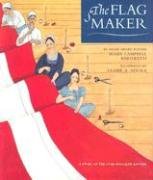
Claire A. Nivola's illustrations complement the text effectively, using soft, detailed artwork to convey both the domestic setting of the flag-making process and the broader historical atmosphere of early nineteenth-century Baltimore. The visual style supports the tone of the writing, neither overly dramatic nor clinical, striking a balance that suits the picture book format and its intended audience of elementary-aged readers.
Bartoletti's prose is clear and measured, avoiding unnecessary embellishment while still conveying a sense of importance and quiet tension. The writing does not rely on dramatic invention to hold interest; instead, it trusts the inherent significance of the historical event to carry the narrative forward. This restraint is appropriate for a book aimed at introducing younger readers to primary historical concepts such as symbolism, patriotism, and the personal stories behind national narratives.
As an educational resource, "The Flag Maker" serves a clear purpose. It offers a way to introduce the origins of "The Star-Spangled Banner" and the War of 1812 without overwhelming young readers with battle details or political complexity. Instead, the book invites reflection on craftsmanship, family collaboration, and civic identity, themes that resonate beyond the immediate historical setting. Teachers and parents looking for material that connects to lessons on American symbols or early American history will likely find this book a useful entry point.
While the book is short, as is typical of the picture book format, it manages to convey meaningful historical context without oversimplifying the emotional weight of the moment. The narrative does not attempt to cover the entirety of the War of 1812 or the Battle of Baltimore, focusing instead on a single, well-chosen episode that stands on its own. This focus is one of the book's more effective choices, allowing for depth within a limited scope rather than attempting a broader survey that might dilute the story's impact.
Overall, "The Flag Maker" succeeds as an approachable and thoughtfully constructed picture book. It combines historical accuracy with an engaging narrative voice, making it a worthwhile addition to classroom libraries or home collections focused on American history for younger audiences. The pairing of Bartoletti's text with Nivola's illustrations results in a book that respects both the intelligence of its young readers and the significance of the history it portrays.