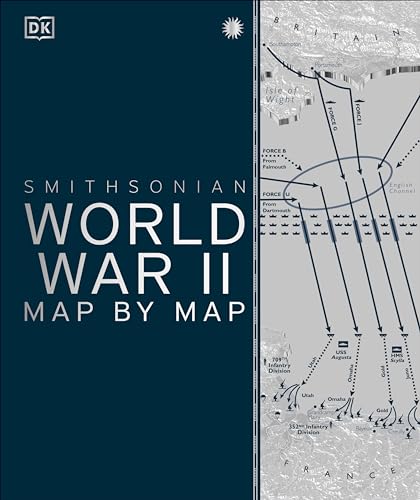
World War II Map by Map
by DK
Popularity
5 / 5
* A book's popularity is determined by how it compares to all other books on this website.
Where to buy?
Buy from Amazon* If you buy this book through the link above, we may receive a small commission at no extra cost to you.
World War II Map by Map by DK
Details
War:
World War II
True Story:
Yes
Biography:
No
Published Date:
2019
ISBN13:
9781465481795
Summary
World War II: Map by Map by Simon Adams is a comprehensive visual guide that chronicles the Second World War through detailed maps and illustrations. The book presents the global conflict's major campaigns, battles, and strategic movements across all theaters of war, from 1939 to 1945. It combines cartography with historical analysis to explain how the war unfolded geographically, showing troop movements, territorial changes, and key military operations. The book offers readers a clear spatial understanding of the war's progression, making complex military strategies and the conflict's massive scope more accessible through its map focused approach.
Review of World War II Map by Map by DK
Simon Adams presents a comprehensive visual exploration of the Second World War in this ambitious cartographic volume that transforms one of history's most complex conflicts into an accessible and engaging narrative. Published by DK, this book distinguishes itself through its commitment to presenting military campaigns, strategic decisions, and global movements through detailed maps that bring clarity to the war's often overwhelming scope.
The book's strength lies in its methodical approach to documenting the conflict from multiple perspectives. Rather than relying solely on traditional narrative history, Adams uses maps as the primary storytelling device, allowing readers to understand the geographical realities that shaped military strategy and political decisions throughout the war. Each map serves a specific purpose, whether illustrating the progression of a particular campaign, showing the disposition of forces at critical moments, or demonstrating how territorial control shifted over time.
The chronological structure provides a logical framework that guides readers from the war's origins through its conclusion. The coverage begins with the tensions and territorial ambitions that characterized the late 1930s, moves through the early German successes in Europe, and continues through the global expansion of the conflict. This approach ensures that readers can follow the war's development systematically, understanding how events in one theater influenced decisions and outcomes in others.
The production quality meets the high standards typically associated with DK publications. The maps feature clear legends, accurate geographical representations, and color-coding that helps distinguish between different nations, alliances, and military movements. Supporting photographs, many drawn from wartime archives, complement the cartographic material and provide visual context for the events being described. The integration of these elements creates a rich visual experience that enhances comprehension.
Adams demonstrates particular skill in presenting complex military operations in digestible formats. Major campaigns such as the Battle of Britain, Operation Barbarossa, the North African campaigns, and the island-hopping strategy in the Pacific receive detailed attention. The maps break down these operations into understandable components, showing troop movements, front lines, supply routes, and strategic objectives. This treatment makes it possible to grasp the scale and complexity of operations that involved millions of personnel across vast distances.
The global perspective represents another significant achievement. The book does not limit itself to European or Pacific theaters but addresses the war's impact across continents. Coverage includes the Eastern Front, the China-Burma-India theater, the Atlantic and Mediterranean naval campaigns, and operations in Africa and the Middle East. This comprehensive approach reflects the truly worldwide nature of the conflict and helps readers understand how interconnected the various theaters were.
The explanatory text accompanying each map provides essential context without overwhelming readers with excessive detail. Adams strikes a reasonable balance between offering enough information to make the maps meaningful while keeping the focus on visual representation. The writing explains strategic objectives, describes key battles and turning points, and notes significant outcomes, all while maintaining clarity and accessibility.
Statistical information and timeline elements add another layer of utility. The book includes data on military strengths, casualty figures, production numbers, and other quantitative aspects of the war effort. These details help readers appreciate the massive scale of mobilization and destruction that characterized the conflict. Timeline features ensure that readers can place specific events within the broader chronology of the war.
The book serves multiple audiences effectively. History enthusiasts seeking a visual reference for understanding military campaigns will find substantial value in the detailed maps. Students looking for a clear overview of the war's progression have access to well-organized information that supports learning. Even readers with extensive knowledge of the period may discover new insights through the visual presentation of familiar events.
While the map-centric approach offers many advantages, it necessarily means that certain aspects of the war receive less attention. The book focuses primarily on military and strategic dimensions, with less emphasis on political developments, diplomatic efforts, resistance movements, or the experiences of civilians and occupied populations. These topics appear but remain secondary to the main cartographic narrative.
The book functions effectively as both a reference work and a reading experience. The clear organization makes it easy to locate information about specific campaigns or time periods, while the logical flow supports cover-to-cover reading. The visual nature of the content makes it possible to absorb information at different levels, from quick overviews to detailed study of particular operations.
Simon Adams has created a valuable resource that makes the Second World War's complexity more comprehensible through thoughtful cartographic presentation. The combination of detailed maps, supporting imagery, and clear explanatory text offers an effective approach to understanding this pivotal historical event. For anyone seeking to grasp the geographical and strategic dimensions of the war, this volume provides an informative and visually engaging guide.


