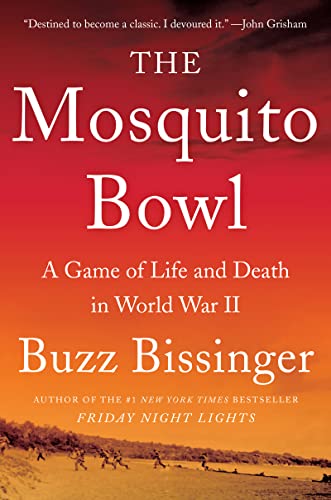
The Mosquito Bowl
by Buzz Bissinger
"A Game of Life and Death in World War II"
Popularity
4.96 / 5
* A book's popularity is determined by how it compares to all other books on this website.
Where to buy?
Buy from Amazon* If you buy this book through the link above, we may receive a small commission at no extra cost to you.
The Mosquito Bowl by Buzz Bissinger
Details
War:
World War II
True Story:
Yes
Biography:
No
Region:
Asia
Page Count:
544
Published Date:
2022
ISBN13:
9780062879929
Summary
The Mosquito Bowl tells the story of a college football game played on Christmas Eve 1944 between two U.S. Marine teams on Guadalcanal during World War II. Buzz Bissinger chronicles how these young athletes, many destined for the brutal Battle of Okinawa, found a brief respite from war through football. The book examines their lives before the war, the camaraderie formed through sports, and the tragic fate many faced in combat. It's a poignant exploration of youth, sacrifice, and the intersection of American sports culture with the realities of World War II.
Review of The Mosquito Bowl by Buzz Bissinger
Buzz Bissinger, the Pulitzer Prize-winning journalist best known for "Friday Night Lights," turns his attention to a lesser-known episode of World War II in "The Mosquito Bowl." This meticulously researched work chronicles an American football game played on Christmas Eve 1944 between two Marine Corps teams on the island of Guadalcanal, but the game itself serves as merely the focal point for a far more profound exploration of sacrifice, youth, and the brutal realities of the Pacific Theater.
The book centers on a group of young men who were among the nation's most promising college football players before the war intervened. These athletes left campuses across America to serve in the Marine Corps, and many found themselves assigned to the Fourth and Twenty-Ninth Marine Regiments. Bissinger traces their journeys from college stadiums to the deadly beaches and jungles of the Pacific, where their athletic prowess would prove far less valuable than their courage and resilience.
What distinguishes this narrative from standard sports history is Bissinger's unflinching examination of what these men faced after that makeshift football game on Guadalcanal. Within months of playing before a crowd of fellow servicemen, many of these same athletes would participate in the invasion of Okinawa, one of the bloodiest battles of the Pacific War. The contrast between the temporary escape that the football game provided and the horrific combat that awaited them creates a poignant emotional arc that runs throughout the book.
Bissinger demonstrates his trademark narrative skill in weaving together multiple biographical threads. He profiles numerous players, offering readers insight into their backgrounds, their college careers, and their motivations for enlisting or accepting their draft notices. These individual stories prevent the book from becoming an impersonal military history, instead grounding the larger narrative in human experience. The author draws on letters, military records, and interviews with surviving family members to reconstruct these lives with considerable detail.
The research underlying this work is extensive and apparent throughout. Bissinger consulted military archives, personal correspondence, newspaper accounts, and other primary sources to piece together both the football game itself and the subsequent military campaigns. His description of the Battle of Okinawa is particularly detailed and harrowing, capturing the island's treacherous terrain, the fanatical resistance of Japanese forces, and the staggering casualties suffered by both sides.
The book does not shy away from the grim statistics or the reality of what combat meant for these young men. Many of the football players who participated in the Mosquito Bowl never returned home. Those who did survive often carried physical wounds and psychological scars that would affect them for the remainder of their lives. Bissinger handles these outcomes with respect and solemnity, avoiding sentimentality while still honoring the magnitude of their sacrifice.
One of the work's strengths lies in its ability to contextualize the football game within the broader narrative of World War II and American culture. The temporary return to normalcy that the game represented speaks to the ways military personnel sought moments of relief from the constant stress and danger of their circumstances. Football, so central to American collegiate life and identity, became a brief connection to the world these men had left behind and hoped to return to.
Bissinger's prose remains accessible and engaging throughout, maintaining the narrative momentum that characterized his earlier works. He balances the lighter moments surrounding the game preparation and execution with the sobering reality of what came after. The pacing allows readers to become invested in these individual lives before confronting their fates.
The book also provides valuable insight into the Marine Corps culture of the era and the particular challenges of the Pacific Theater. The fighting conditions, the nature of the enemy resistance, and the toll on American forces all receive careful attention. Bissinger places the reader alongside these men in their training, their moments of respite, and their combat experiences.
"The Mosquito Bowl" stands as both a sports story and a war story, but ultimately it functions as a memorial to a generation of young men whose potential was cut short or forever altered by global conflict. The football game serves as an effective narrative device, but the book's real achievement lies in its portrait of these individuals and its honest reckoning with what was asked of them. Bissinger has crafted a work that honors their memory while refusing to romanticize the war that claimed so many of them.


