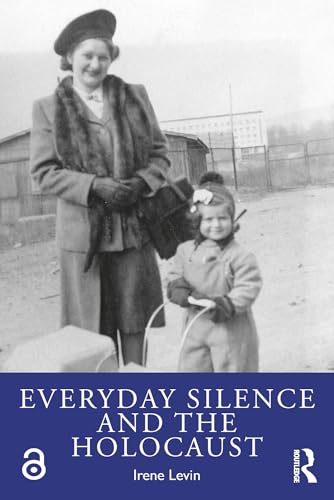
Everyday Silence and the Holocaust
by Irene Levin
Popularity
5 / 5
* A book's popularity is determined by how it compares to all other books on this website.
Where to buy?
Buy from Amazon* If you buy this book through the link above, we may receive a small commission at no extra cost to you.
Everyday Silence and the Holocaust by Irene Levin
Details
War:
World War II
Perspective:
Researcher
True Story:
Yes
Biography:
Yes
Region:
Europe
Page Count:
151
Published Date:
2024
ISBN13:
9781040112793
Summary
Everyday Silence and the Holocaust by Irene Levin examines how ordinary Norwegian citizens responded to the persecution and deportation of Jews during World War II. The book explores the phenomenon of silence and passive complicity among the Norwegian population as their Jewish neighbors were arrested and sent to concentration camps. Levin, drawing on historical research and personal accounts, investigates why so many remained silent and how this silence enabled the Holocaust. The work contributes to understanding bystander behavior during genocide and raises important questions about moral responsibility and collective memory in Norwegian society.
Review of Everyday Silence and the Holocaust by Irene Levin
Irene Levin's "Everyday Silence and the Holocaust" presents a thoughtful examination of how ordinary Norwegian citizens responded to the persecution and deportation of Jews during the Second World War. The book focuses specifically on the Norwegian context, exploring the complex dynamics of silence, complicity, and resistance within a society confronted with Nazi occupation and genocide.
Levin approaches her subject through a sociological lens, investigating the mechanisms that allowed widespread silence to persist among the general population while their Jewish neighbors faced arrest and deportation. The work draws attention to Norway's particular historical circumstances, where a relatively small Jewish population had lived peacefully integrated into society before the war. This integration makes the subsequent silence surrounding their persecution all the more striking and worthy of examination.
The book examines the various forms that silence took during this period. Some Norwegians remained silent out of fear for their own safety and that of their families, understanding that speaking out against Nazi policies could result in severe consequences. Others maintained silence due to social pressure, uncertain about how to respond in a situation where collective action seemed impossible. Still others chose silence as a form of passive acceptance, neither actively supporting nor opposing the policies being implemented around them.
Levin's analysis extends beyond simple categorization of silence as either complicity or self-preservation. She explores the nuanced reality of daily life under occupation, where people faced difficult choices with imperfect information and limited agency. The work acknowledges that while some Norwegians did help Jews escape to Sweden or hide them from authorities, these acts of resistance were exceptional rather than common. The more typical response was a form of willful ignorance or passive acceptance of events unfolding in their communities.
The book contributes to broader Holocaust scholarship by examining how genocide occurs not only through active perpetration but also through the absence of resistance. The Norwegian case offers particular insights because Norway had relatively democratic traditions and civil institutions before the occupation, yet these did not translate into widespread protection of Jewish citizens when the crisis came. This raises important questions about the limits of civil society and democratic culture when confronted with authoritarian force.
Levin's work also considers the aftermath of the Holocaust in Norway, exploring how the silence that characterized the war years continued in different forms during the post-war period. The difficulties faced by returning Jewish survivors, the reluctance to confront uncomfortable truths about Norwegian behavior during the occupation, and the gradual process of historical reckoning all receive attention. This longitudinal perspective adds depth to the analysis, showing how patterns of silence can persist and evolve across generations.
The sociological framework employed throughout the book provides tools for understanding how ordinary people navigate extraordinary circumstances. Levin examines social norms, group dynamics, and the psychology of bystander behavior without reducing complex human choices to simple formulas. The analysis respects the difficulty of the situations people faced while still maintaining a critical perspective on the consequences of their inaction.
The Norwegian focus of the book makes it particularly valuable for readers interested in Scandinavian history and the varied experiences of different nations under Nazi occupation. While much Holocaust literature centers on Germany, Poland, and other locations with larger Jewish populations, Norway's experience offers distinct lessons about how genocide unfolds in societies with different demographic and political characteristics.
"Everyday Silence and the Holocaust" serves as both a historical study and a meditation on the nature of moral choice in extreme circumstances. It challenges readers to consider what ordinary silence means in the face of extraordinary evil, and how societies must grapple with uncomfortable truths about their past. The book avoids simplistic judgments while maintaining moral clarity about the consequences of inaction. Its examination of the Norwegian experience provides insights applicable to understanding bystander behavior and societal complicity in other contexts as well.
For readers seeking to understand the Holocaust beyond the actions of perpetrators and the experiences of victims, Levin's work offers important perspectives on the vast middle ground of those who neither actively participated in genocide nor effectively resisted it. This examination of everyday silence reveals how catastrophic events depend not only on those who commit atrocities but also on those who allow them to proceed unopposed.