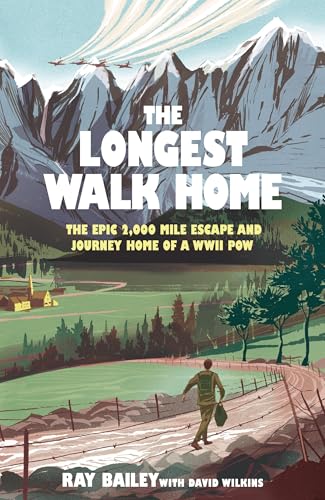
The Longest Walk Home
by Ray Bailey
"The Epic 2,000 Mile Escape of a WWII POW, in His Own Words"
Popularity
4.92 / 5
* A book's popularity is determined by how it compares to all other books on this website.
Where to buy?
Buy from Amazon* If you buy this book through the link above, we may receive a small commission at no extra cost to you.
The Longest Walk Home by Ray Bailey
Details
War:
World War II
Perspective:
Prisoners of War
True Story:
Yes
Biography:
Yes
Region:
Europe
Published Date:
2025
ISBN13:
9781529447064
Summary
Ray Bailey's memoir recounts his extraordinary escape from a German prisoner-of-war camp during World War II. After being captured, Bailey embarked on a perilous 2,000-mile journey across Europe to return home. The book details his incredible determination, resourcefulness, and survival skills as he navigated enemy territory, faced constant danger, and relied on the kindness of strangers. This gripping true story showcases the resilience of the human spirit and the lengths one soldier went to regain his freedom during one of history's darkest periods.
Review of The Longest Walk Home by Ray Bailey
"The Longest Walk Home: The Epic 2,000-Mile Escape of a WWII Prisoner of War" tells the remarkable story of a soldier's determination to survive and return home against overwhelming odds. The book chronicles the harrowing experience of being captured during the Second World War and the subsequent decision to attempt an escape that would stretch across a vast and unforgiving distance. Rather than simply recounting a chronological sequence of events, the narrative invites reflection on the psychological and physical toll such an ordeal demands.
The author approaches the subject with evident respect for the historical record, grounding the account in details that feel authentic without veering into sensationalism. The prose maintains a measured pace, allowing readers to absorb the gravity of each decision made under extreme duress. This is not a story told for shock value; instead, it functions as a testament to endurance, resourcefulness, and the human capacity to persevere when circumstances seem insurmountable.
One of the book's strengths lies in its attention to the practical realities of wartime captivity and escape. Readers gain insight into the logistical challenges faced by prisoners attempting to navigate unfamiliar and hostile terrain, often with minimal resources and constant threat of recapture. The narrative does not shy away from depicting the uncertainty and fear that accompanied each step of the journey, nor does it overstate the drama for effect. This balance between honesty and restraint gives the account a grounded, believable quality that many readers of military history will appreciate.
The emotional core of the book rests on the relationship between the protagonist and the broader context of war itself. The story illustrates how individual survival was often contingent upon decisions made in isolation, far removed from command structures or support networks. This isolation underscores the loneliness inherent in such an escape, while also highlighting moments of unexpected kindness from strangers encountered along the way. These encounters, presented without excessive sentimentality, serve to humanize the larger historical narrative of the war.
Structurally, the book benefits from a clear sense of progression, with each stage of the escape marking a new set of challenges and decisions. This approach helps maintain narrative momentum while also allowing space for reflection on the broader implications of the events being described. The writing avoids unnecessary embellishment, focusing instead on conveying the lived experience of the central figure with clarity and precision.
Readers interested in World War II history, particularly accounts of prisoner experiences and escape narratives, will find this book a valuable addition to the genre. It complements other works focused on survival and resilience during wartime, offering a perspective that emphasizes individual agency within the context of large-scale conflict. The book does not attempt to generalize the experience of all prisoners of war, but rather presents a specific, well-documented account that stands on its own merits.
The pacing throughout remains steady, neither rushing through significant events nor lingering excessively on minor details. This balance ensures that the book remains accessible to a general readership while still providing the depth of detail that history enthusiasts often seek. The author's restraint in interpretation allows the events themselves to carry the narrative weight, trusting readers to draw their own conclusions about the significance of what is described.
Overall, "The Longest Walk Home" offers a compelling and carefully constructed account of survival during one of history's most challenging periods. It succeeds in presenting a personal story within a broader historical framework without losing sight of the individual at its center. The book's measured tone and attention to factual detail make it a worthwhile read for those interested in understanding the lesser-known aspects of wartime experience, particularly the extraordinary lengths to which individuals went in pursuit of freedom and survival.