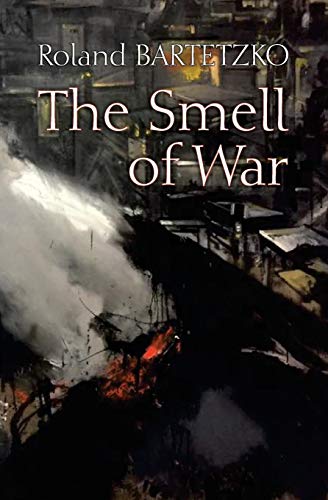
The Smell of War
by Roland Bartetzko
"Lessons from the Battlefield"
Popularity
4.57 / 5
* A book's popularity is determined by how it compares to all other books on this website.
Where to buy?
Buy from Amazon* If you buy this book through the link above, we may receive a small commission at no extra cost to you.
The Smell of War by Roland Bartetzko
Details
Biography:
No
Page Count:
132
Published Date:
2018
ISBN13:
9789951562355
Summary
The Smell of War is a firsthand account by Roland Bartetzko, a former soldier who fought in the Croatian War of Independence and the Kosovo conflict during the 1990s. The book offers practical insights and hard-earned lessons from modern warfare, drawn from his direct battlefield experience. Bartetzko shares observations about combat tactics, soldier psychology, and the realities of armed conflict that differ from theoretical military training. Written from a veteran's perspective, it provides readers with an unfiltered look at contemporary warfare and the practical knowledge gained through actual combat situations.
Review of The Smell of War by Roland Bartetzko
Roland Bartetzko's "The Smell of War: Lessons from the Battlefield" offers a distinctive blend of personal memoir and practical military insight, drawn from the author's own experience as a soldier in some of the most brutal conflicts of the 1990s Balkans. Bartetzko, a German national who volunteered to fight with Croatian and later Bosnian forces, writes from the perspective of someone who has lived through the chaos, fear, and strange clarity that combat produces. This lends the book an authenticity that is difficult to manufacture through research alone, and it shapes the tone of the entire work.
The title itself signals the book's central approach: war is not just described through tactics and strategy, but through the senses. Bartetzko pays close attention to the physical and psychological texture of combat, the sounds, smells, and sudden shifts in perception that soldiers experience under fire. This sensory focus sets the book apart from more conventional military memoirs, which often emphasize chronology and operational detail over the visceral, lived experience of violence. Readers looking for a straightforward historical account of the Balkan wars may find this approach unconventional, but it succeeds in conveying something that dry historical narration often misses: the immediate, disorienting reality of being a participant in armed conflict.
Beyond the memoir elements, the book positions itself as a source of practical lessons, drawing on the author's later career as a writer of military and tactical guides. Bartetzko has authored several books focused on combat skills, urban warfare, and security topics, and that background is evident in how he structures his reflections. Rather than simply recounting events, he frequently steps back to extract broader observations about leadership under pressure, the unpredictability of violence, and the gap between training and the reality of the battlefield. This dual structure, part narrative and part instructional commentary, gives the book a hybrid identity that may appeal to readers interested in both personal war stories and the practical dimensions of soldiering.
One of the book's strengths is its refusal to romanticize combat. Bartetzko does not present war as an adventure or a test of heroism in the conventional sense. Instead, he approaches it with a kind of clear-eyed pragmatism, acknowledging fear, confusion, and the arbitrary nature of survival in combat zones. This perspective is consistent with his broader body of work, which tends to favor practical realism over dramatization. For readers familiar with his other writings on tactical survival and security, this tone will feel familiar, but it is particularly effective here because it is grounded in direct personal experience rather than theoretical instruction.
The book's structure, moving between episodic recollections and more reflective passages, means that it does not always read as a linear war memoir. Some readers may find the pacing uneven, as the narrative shifts between specific incidents and broader lessons without always providing extensive contextual background on the wider political and military situation in the former Yugoslavia. Those unfamiliar with the history of the Balkan conflicts may benefit from supplementing this book with additional historical reading, as Bartetzko's focus remains primarily on his own experiences rather than a comprehensive account of the war's causes or broader consequences.
Despite this, the book succeeds in its core aim: offering an unfiltered, firsthand perspective on what combat actually feels like, paired with the kind of practical insight that comes only from direct exposure to violence and danger. It will likely appeal most to readers with an interest in military history, veterans' narratives, or the psychological dimensions of warfare, as well as those already familiar with Bartetzko's other work in the tactical and security writing space. As a contribution to the genre of war memoirs, "The Smell of War" stands out for its sensory immediacy and its refusal to simplify the experience of combat into easy narrative arcs. It is a thoughtful, often unsettling account that adds a personal, ground-level perspective to the broader historical record of the conflicts it describes.


