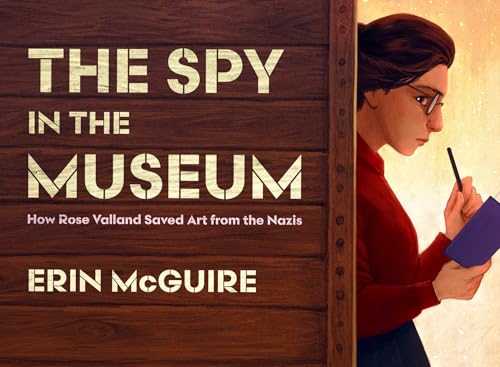
The Spy in the Museum
by Erin McGuire
"How Rose Valland Saved Art from the Nazis"
Popularity
4.84 / 5
* A book's popularity is determined by how it compares to all other books on this website.
Where to buy?
Buy from Amazon* If you buy this book through the link above, we may receive a small commission at no extra cost to you.
The Spy in the Museum by Erin McGuire
Details
War:
World War II
Perspective:
Spying
True Story:
Yes
Biography:
No
Region:
Europe
Page Count:
21
Published Date:
2025
ISBN13:
9781534466173
Summary
Rose Valland was a French art historian who worked at the Jeu de Paume museum in Paris during World War II. When the Nazis occupied France and systematically looted art treasures, Valland secretly documented which artworks were stolen and where they were sent. She risked her life to gather this intelligence, carefully recording information that would later prove crucial in recovering thousands of stolen artworks after the war. This graphic novel tells the true story of Valland's courage and determination in protecting cultural heritage during one of history's darkest periods.
Review of The Spy in the Museum by Erin McGuire
Erin McGuire's "The Spy in the Museum: How Rose Valland Saved Art from the Nazis" brings to light one of World War II's most remarkable yet underappreciated stories of cultural resistance. This graphic novel introduces young readers to Rose Valland, a French art historian whose quiet courage and meticulous documentation helped recover thousands of artworks stolen by the Nazis during the occupation of France. Through accessible illustrations and carefully crafted narrative, McGuire transforms a complex historical episode into an engaging account that honors both the subject and the gravity of her mission.
The book centers on Rose Valland's work at the Jeu de Paume museum in Paris, where the Nazis used the building as a sorting and storage facility for confiscated art. Jewish families and other victims of Nazi persecution had their collections seized, with valuable pieces destined for German museums or the private collections of high-ranking officials. Works deemed unsuitable for Nazi tastes faced destruction. Valland, who managed to retain her position at the museum throughout the occupation, risked her life by secretly recording details about the stolen artworks, including their origins, destinations, and the train routes used to transport them out of France.
McGuire's illustrations complement the serious nature of the subject matter while remaining appropriate for middle-grade readers. The visual storytelling allows complex information about art theft, occupation, and resistance to unfold in a format that never feels overwhelming or didactic. The artwork balances historical accuracy with readability, depicting both the grandeur of the stolen masterpieces and the tension of Valland's dangerous work. The graphic novel format proves particularly effective in conveying the visual nature of Valland's mission, as readers can see representations of the art she fought to protect alongside the human story of her determination.
The narrative structure moves efficiently through Valland's story, from the early days of the occupation to the eventual recovery efforts after liberation. McGuire demonstrates strong research throughout, grounding the account in historical fact while maintaining narrative momentum. The book explains how Valland passed information to the French Resistance and later to the Allied forces, information that proved crucial in tracking down and recovering stolen artworks after the war. Her documentation became essential evidence in understanding the scope of Nazi plunder and in returning works to their rightful owners or heirs.
One of the book's significant strengths lies in its ability to make abstract concepts concrete for younger readers. The scale of art theft during the Nazi era can be difficult to comprehend, but McGuire contextualizes it through Valland's daily observations and the specific artworks that passed through the Jeu de Paume. The book also addresses the broader implications of cultural theft, helping readers understand that these were not merely valuable objects but pieces of heritage, memory, and identity deliberately stripped from families and communities.
The graphic novel format also allows McGuire to convey the constant danger Valland faced without resorting to excessive drama. The tension comes through in quiet moments: Valland maintaining her composure while German officers discussed shipments, her careful concealment of notes, and her need to appear unimportant and overlooked. This restraint in storytelling mirrors Valland's own approach to her work, where success depended on remaining inconspicuous while performing acts of extraordinary bravery.
McGuire provides readers with a nuanced portrait of occupation and resistance. Valland's story illustrates that heroism during wartime took many forms beyond armed combat. Her expertise, patience, and commitment to preserving cultural heritage represented a different kind of resistance, one that required sustained courage over years rather than a single dramatic act. The book succeeds in showing how ordinary people in extraordinary circumstances could make significant contributions to opposing tyranny.
The book includes supplementary material that enhances its educational value without interrupting the narrative flow. Background information about the Nazi art theft program, the fate of recovered artworks, and Valland's postwar work adds depth for readers interested in learning more. These additions help place Valland's actions within the broader context of efforts to document and rectify cultural crimes committed during the war.
"The Spy in the Museum" serves as both an engaging introduction to an important historical figure and a thoughtful exploration of why cultural preservation matters, especially during times of conflict. McGuire has created a work that respects its young audience while addressing serious themes of theft, persecution, and justice. The book makes a compelling case for why Rose Valland deserves recognition alongside other resistance heroes, and it does so through a format that makes her story accessible to a new generation of readers. For classrooms, libraries, and families seeking quality historical graphic novels, this work offers both educational merit and genuine narrative engagement.


