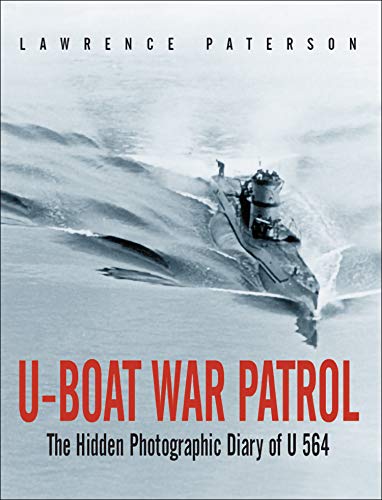
U-Boat War Patrol
by Lawrence Paterson
"The Hidden Photographic Diary of U-564"
Popularity
4.78 / 5
* A book's popularity is determined by how it compares to all other books on this website.
Where to buy?
Buy from Amazon* If you buy this book through the link above, we may receive a small commission at no extra cost to you.
U-Boat War Patrol by Lawrence Paterson
Details
War:
World War II
Perspective:
Submarines
Military Unit:
Kriegsmarine
True Story:
Yes
Biography:
No
Region:
Europe
Page Count:
369
Published Date:
2016
ISBN13:
9781473884618
Summary
U-boat War Patrol by Lawrence Paterson offers a detailed examination of German submarine operations during World War II. The book provides insight into the daily experiences of U-boat crews, documenting their missions, challenges, and the harsh realities of undersea warfare. Paterson draws on historical records and personal accounts to recreate the atmosphere aboard these vessels during combat patrols. The work explores the tactical aspects of U-boat operations, the dangers faced by submariners, and their role in the Battle of the Atlantic, giving readers a comprehensive understanding of this crucial aspect of naval warfare.
Review of U-Boat War Patrol by Lawrence Paterson
Lawrence Paterson's "U-boat War Patrol" offers readers a detailed examination of life aboard German submarines during World War II, focusing on the operational realities of these underwater vessels. Paterson, an established naval historian with several works on U-boat warfare to his credit, brings considerable expertise to this exploration of one of the war's most dangerous and psychologically demanding environments.
The book distinguishes itself through its commitment to presenting the daily routines, operational procedures, and human experiences of U-boat crews during their combat patrols. Rather than focusing exclusively on dramatic battles or strategic overviews, Paterson constructs a comprehensive portrait of what submariners actually encountered during missions that could last weeks or even months. This approach provides valuable insight into the mechanical, logistical, and human factors that determined success or failure beneath the waves.
Paterson draws extensively from primary sources, including war diaries, patrol reports, and veteran accounts, to recreate the atmosphere aboard these vessels. The technical aspects of U-boat operations receive thorough attention, with explanations of navigation procedures, attack protocols, and the constant challenges of maintaining equipment in harsh maritime conditions. The author manages to make these technical details accessible without oversimplifying the complexity of submarine warfare.
The human dimension of U-boat service features prominently throughout the narrative. Life in the cramped, damp confines of a submarine tested crew members physically and mentally. The constant threat of depth charge attacks, the weeks spent without fresh food or proper hygiene facilities, and the psychological pressure of operating in enemy waters created an environment unlike any other branch of military service. Paterson captures these realities without sensationalizing them, allowing the facts themselves to convey the demanding nature of this duty.
The operational procedures described in the book reveal the meticulous planning and coordination required for each patrol. From departure protocols to the intricacies of convoy attacks, Paterson walks readers through the stages of a typical war patrol. The tactical evolution of U-boat warfare also receives consideration, particularly how Allied countermeasures forced changes in German submarine tactics as the war progressed. The introduction of improved radar, aircraft patrols, and escort techniques transformed what had been relatively successful hunting grounds into increasingly perilous zones for U-boat operations.
Paterson provides context for understanding the broader strategic significance of the U-boat campaign. The Battle of the Atlantic represented a critical theater where Germany sought to sever Britain's maritime lifelines. The effectiveness of U-boat patrols directly impacted Allied supply chains and strategic planning. By focusing on individual patrols, the book illuminates how tactical-level operations connected to larger strategic objectives.
The research foundation supporting the narrative demonstrates thorough scholarship. Paterson consulted German naval archives, British Admiralty records, and various collections of personal accounts. This multi-source approach helps create a balanced perspective on events, avoiding the pitfalls of relying too heavily on any single viewpoint. The attention to documentary evidence strengthens the book's credibility as a historical work.
One of the book's strengths lies in its ability to present German submariners as professional sailors rather than ideological figures. The focus remains on their operational experiences, training, and the challenges they faced in executing their missions. This approach enables readers to understand the human and professional aspects of submarine warfare without becoming distracted by broader political or moral questions that other works might emphasize.
The pacing maintains reader engagement despite the detailed nature of the subject matter. Paterson structures the material to balance technical information with narrative progression, preventing the text from becoming either too dry or too superficial. The writing demonstrates respect for readers' intelligence while remaining accessible to those without specialized naval knowledge.
"U-boat War Patrol" serves as a valuable resource for military history enthusiasts, particularly those interested in naval warfare and submarine operations. The book's detailed examination of patrol procedures and daily life aboard U-boats fills a specific niche in World War II literature. While numerous works examine U-boat warfare from strategic or biographical angles, fewer provide this level of operational detail.
The book succeeds in its primary objective of documenting what U-boat war patrols actually entailed. Through careful research and clear presentation, Paterson has created a work that educates readers about a significant aspect of World War II naval history. The combination of technical accuracy, human interest, and historical context makes this a solid contribution to the literature on submarine warfare.


