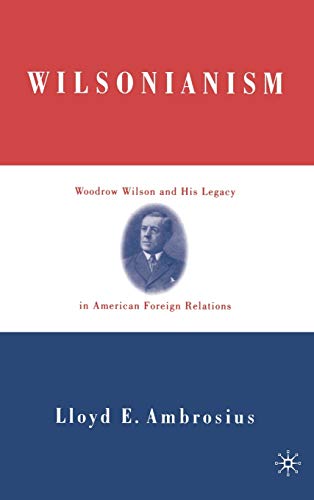
Wilsonianism
by Lloyd E. Ambrosius
"Woodrow Wilson and His Legacy in American Foreign Relations"
Popularity
2.46 / 5
* A book's popularity is determined by how it compares to all other books on this website.
Where to buy?
Buy from Amazon* If you buy this book through the link above, we may receive a small commission at no extra cost to you.
Wilsonianism by Lloyd E. Ambrosius
Details
Perspective:
Researcher
True Story:
Yes
Biography:
Yes
Region:
North America
Page Count:
256
Published Date:
2002
ISBN13:
9781403960085
Description
Brief Summary
Wilsonianism by Lloyd E. Ambrosius delves into the intricacies of Woodrow Wilson’s liberal ideology and its impact on American foreign policy. The book compiles a series of essays, both published and unpublished, that explore Wilson's attempts to establish a new world order during and after World War One. Although Wilson's ambitions for a globally reformed political landscape did not come to fruition, his principles continue to influence the course of U.S. foreign relations.
Main Themes and Topics
The book foregrounds several key themes, including national self-determination, economic globalization, collective security, and progressive historicism. Ambrosius frames these concepts within the context of Wilson's vision for a liberal international order. He scrutinizes the tensions within Wilson’s ideals, especially the challenges posed by cultural pluralism and global economic interdependence. Furthermore, Wilsonianism examines the impact of these principles over the span of the 20th century, highlighting both their enduring appeal and the difficulties they have posed in practical foreign policy applications.
Writing Style and Tone
Ambrosius employs a scholarly tone that reflects his expertise in American foreign relations. His writing is analytical, providing a detailed assessment of Wilson's ideological legacy. The essays are meticulously researched and often rely on a wealth of historical data to substantiate their claims. Despite the academic nature of the text, Ambrosius's prose remains accessible, making complex political theories understandable to a broad audience. The author maintains objectivity, offering a balanced perspective on the successes and failures of Wilsonian ideals.
Criticism
Some readers may find Wilsonianism dense due to its comprehensive analysis and frequent use of historical references. While the book is praised for its depth, it requires a degree of familiarity with historical and political contexts to fully appreciate its nuances. Critics also point out that the focus on Wilson's failures could overshadow his achievements, although Ambrosius endeavors to address both aspects adequately.