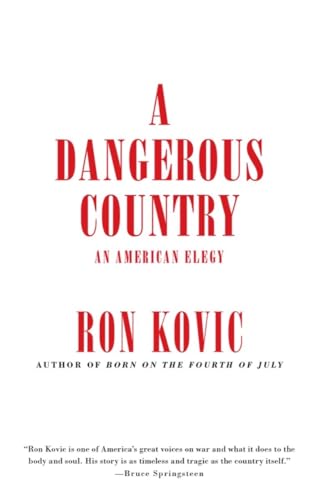
A Dangerous Country
by Ron Kovic
"An American Elegy"
Popularity
4.76 / 5
* A book's popularity is determined by how it compares to all other books on this website.
Where to buy?
Buy from Amazon* If you buy this book through the link above, we may receive a small commission at no extra cost to you.
A Dangerous Country by Ron Kovic
Details
Biography:
No
Published Date:
2024
ISBN13:
9781636141664
Summary
A Dangerous Country is a memoir by Ron Kovic, the Vietnam War veteran and antiwar activist who wrote Born on the Fourth of July. In this deeply personal work, Kovic reflects on his experiences as a paralyzed veteran and his journey from Marine to peace activist. The book explores themes of patriotism, disillusionment, and the true costs of war. Through elegiac prose, Kovic examines American identity, the Vietnam War's lasting impact, and his ongoing struggle for peace and justice. It serves as both a continuation of his life story and a meditation on what it means to love one's country while opposing its wars.
Review of A Dangerous Country by Ron Kovic
Ron Kovic's "A Dangerous Country: An American Elegy" stands as a powerful follow-up to his groundbreaking memoir "Born on the Fourth of July," offering readers a deeply personal meditation on patriotism, war, and the American experience. Published decades after his first memoir transformed him into one of the most recognizable voices of the anti-war movement, this work finds Kovic reflecting on a lifetime shaped by the Vietnam War and its enduring aftermath.
The book presents itself as both memoir and elegy, with Kovic weaving together memories of his journey from enthusiastic Marine recruit to paralyzed veteran to prominent peace activist. The narrative moves between different periods of his life, creating a tapestry that illustrates how the consequences of war extend far beyond the battlefield. Kovic's prose carries the weight of lived experience, shaped by more than four decades of grappling with the physical and psychological wounds that have defined his adult life.
Central to the work is Kovic's ongoing struggle to reconcile his love for his country with his profound opposition to the war that left him paralyzed from the chest down. This tension drives much of the narrative, as he examines what it means to be patriotic while simultaneously challenging the decisions made by those in power. The book does not shy away from the complexities inherent in this position, acknowledging the pain of feeling alienated from the very nation one sought to serve.
Kovic's writing demonstrates a remarkable capacity for both rage and tenderness. He chronicles his experiences with the Veterans Administration healthcare system, the political activism that became his life's work, and the personal relationships strained or strengthened by his transformation. The prose alternates between moments of stark, unflinching description and passages of almost lyrical reflection, creating a rhythm that mirrors the emotional landscape of a life marked by trauma and advocacy.
The historical context Kovic provides enriches the personal narrative, connecting his individual story to broader movements for peace and veterans' rights. He revisits significant moments from his activism, including protests and speaking engagements that brought him into contact with other veterans, activists, and ordinary Americans struggling to make sense of war's human cost. These sections offer valuable insights into the development of the anti-war movement and the challenges faced by those who spoke out against military interventions.
One of the book's strengths lies in its refusal to offer simple answers or neat resolutions. Kovic presents his ongoing struggles with physical pain, emotional trauma, and the frustration of watching new generations sent into new conflicts. The elegy of the title refers not only to those lost in war but to a certain vision of America itself, one that Kovic believes has been compromised by repeated military adventures and insufficient care for those who serve.
The writing occasionally circles back to familiar themes and memories, a structure that some readers may find repetitive but which others will recognize as reflecting the way trauma reshapes memory and consciousness. Kovic returns again and again to pivotal moments, examining them from new angles and with the perspective granted by time. This approach reinforces the book's central argument that the effects of war cannot be neatly compartmentalized or resolved.
Kovic's perspective as someone who has spent more of his life dealing with the consequences of war than he spent preparing for and fighting in it adds particular weight to his observations. The book serves as a testament to the long-term costs of military conflict, costs that extend decades beyond ceasefire agreements and troop withdrawals. His continued activism and public speaking, despite significant physical challenges, demonstrates a commitment to preventing others from experiencing similar fates.
"A Dangerous Country" functions both as a continuation of Kovic's personal narrative and as a broader commentary on American society's relationship with military service and sacrifice. The book challenges readers to consider the gap between patriotic rhetoric and the reality faced by veterans, particularly those whose opposition to war complicates their status as heroes. Kovic's voice remains urgent and necessary, offering a perspective often missing from contemporary discussions about military intervention and national service.
This work will resonate most strongly with readers interested in veteran experiences, anti-war literature, and American social movements. It adds another chapter to Kovic's remarkable life story while contributing to ongoing conversations about the true costs of war and the responsibilities nations bear toward those who serve in uniform.