The 5 Best D-Day and Normandy Books: Beaches, Soldiers and Command
Author: Editorial Staff
Our Superlatives
Find the best book quickly!
Quick Info
On 6 June 1944, Allied forces landed in Normandy to establish a foothold in German-occupied France. The assault formed the opening of Operation Overlord, a campaign whose success depended on bringing troops ashore, securing the landing area and sustaining an expanding army across the English Channel. American forces landed at Utah and Omaha, British forces at Gold and Sword, and Canadians at Juno. Airborne troops landed inland to support the invasion and secure important routes and crossings.
D-Day required close coordination between armies, navies and air forces. Planning included landing craft, specialized equipment, naval gunfire, bombing and the movement of supplies. Dwight Eisenhower commanded a coalition with different national priorities and strong personalities. Weather complicated the timing, and the decision to proceed placed enormous responsibility on the Allied leadership. Once the assault began, plans met coastal defenses, confusion and uneven progress. Conditions differed sharply between landing areas, making any single beach an incomplete picture of the day.
Establishing the beachheads did not finish the campaign. Allied forces had to move inland against German resistance while supplying men, vehicles, ammunition and fuel. Fighting around Caen and Saint-Lô and through the hedgerow country demanded adaptation and imposed heavy losses. Allied air power and supply capacity helped shape the campaign, while German transportation and fuel problems restricted the defenders. The American breakout through Operation Cobra contributed to the collapse of German positions in Normandy and the advance across France.
French civilians endured bombing, destruction and displacement as liberation approached. Medics treated casualties under fire, and infantry units carried the cumulative strain of repeated fighting. The Normandy campaign therefore involves more than the drama of reaching the beaches: it is also a history of coalition leadership, sustained operations and the human cost of defeating German forces in western Europe.
Quick Facts:
- D-Day took place on 6 June 1944 as the opening assault of the Normandy invasion.
- The five main landing beaches were Utah, Omaha, Gold, Juno and Sword.
- Eisenhower commanded the Allied coalition responsible for Operation Overlord.
- The fighting continued inland around Caen, Saint-Lô and Normandy's hedgerows after the beachheads were established.
- Operation Cobra helped American forces break out of the Normandy battle area.
Our Picks
In-depth look at each recommended title

Popularity:
4.97 / 5
* A book's popularity is determined by how it compares to all other books on this website.
Normandy '44
by James Holland
James Holland follows the invasion and subsequent campaign, connecting battlefield experience with air power, logistics and supply.
Normandy '44 by James Holland is the strongest starting point here for readers who want the landings placed within the campaign that followed. Holland moves between command decisions, soldiers' experiences and the practical work of keeping armies supplied. That combination helps explain why reaching the coast was only the first stage of a difficult operation. Fighting around Caen, the struggle near Saint-Lô and the breakout through Operation Cobra form part of a connected military story.
Holland's attention to logistics is particularly useful. Trucks, fuel, ammunition and the capacity to move them matter alongside tanks and individual tactical skill. He also examines German supply problems and the effect of Allied air superiority, giving readers a way to assess familiar claims about the strengths of the opposing armies. British, Canadian, American and German experiences help broaden the view. This is a substantial account, so readers seeking only a short introduction to 6 June may prefer a narrower book. Choose it for an explanation of how the invasion developed into a sustained campaign.
Popularity:
4.87 / 5
* A book's popularity is determined by how it compares to all other books on this website.
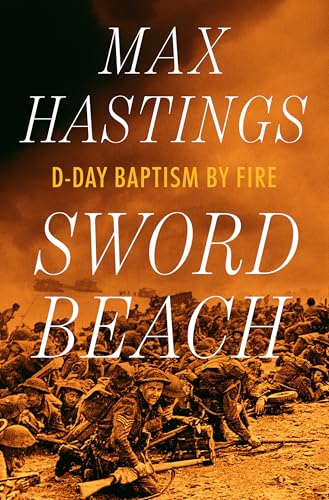
Sword Beach
by Max Hastings
Max Hastings concentrates on Sword Beach and the British assault, including the challenges of moving from the shore toward inland objectives.
Sword Beach by Max Hastings narrows the view to the easternmost Allied landing zone. Its concentration on the British assault provides a useful counterweight to accounts in which Omaha dominates the story of D-Day. Hastings examines the coordination of forces, the defenses troops encountered and the decisions that shaped progress from the coast. The focus makes it easier to follow one sector in detail while still understanding its role in the larger invasion.
The book is especially relevant for readers interested in the relationship between preparations and battlefield results. Naval and air support, specialized equipment and the movement of troops all depended on timing and cooperation. Securing the beach also left difficult inland objectives, including the advance toward Caen. Hastings connects those immediate challenges with the consequences for the campaign. This is a researched military history rather than a participant's memoir, and it offers more operational explanation than Lambert's personal account. Its narrow geographical focus is the reason to choose it, but readers wanting equal coverage of every landing beach should begin with a broader invasion history.

Popularity:
4.9 / 5
* A book's popularity is determined by how it compares to all other books on this website.
Every Man a Hero
by Ray Lambert
Ray Lambert recalls serving as an Army medic, from earlier Mediterranean campaigns to treating wounded soldiers in the first wave at Omaha.
Every Man a Hero brings the invasion close through the experience of Ray Lambert, an Army medic who landed in the first wave at Omaha Beach. His task was to treat wounded soldiers amid the same fire that was causing the casualties. The memoir therefore offers a different emphasis from accounts organized around capturing objectives: it follows the urgent work of keeping people alive when protection and treatment were difficult to obtain.
Lambert's story also reaches back to North Africa and Sicily, placing Omaha within a longer period of military service. That background helps readers understand the experience he brought to the landing rather than encountering him only at its most dramatic moment. Written with Jim DeFelice, the account uses accessible language and keeps personal relationships and loss in view. It is a good choice for readers interested in battlefield medicine and firsthand testimony. Its focus on one man's remembered experience provides emotional and practical detail, but it cannot explain the whole operation. Read it alongside Holland to connect an individual medic's work with the wider campaign.

Popularity:
4.49 / 5
* A book's popularity is determined by how it compares to all other books on this website.
Battle Diary
by Charles Cromwell Martin
Charles Cromwell Martin recounts service with the Queen's Own Rifles of Canada, following Normandy into the later campaign in northwestern Europe.
Battle Diary adds a Canadian infantry voice to a selection that could otherwise become dominated by American and British accounts. Charles Cromwell Martin served as a company sergeant-major in the Queen's Own Rifles of Canada. His account follows the Normandy landings and the fighting that continued across northwestern Europe, making the invasion the beginning of a longer experience rather than a self-contained event.
Martin's direct style places emphasis on the demands of service: fear, exhaustion, decisions under pressure and the relationships that helped men continue. His position gives the book a useful perspective on leadership close to the soldiers carrying out orders. Readers interested in the Canadian contribution will find a personal companion to broader campaign histories, while those comparing memoirs can set his infantry concerns against Lambert's medical responsibilities. The diary-like movement through events does not always produce the smooth pace of a constructed narrative history. That is part of its character, and its geographical scope also extends well beyond Normandy. Choose it for sustained frontline testimony and a Canadian view of the liberation campaign.

Popularity:
4.96 / 5
* A book's popularity is determined by how it compares to all other books on this website.
The Light of Battle
by Michel Paradis
Michel Paradis examines Eisenhower's preparation for D-Day and the military, diplomatic and political pressures of leading the Allied coalition.
The Light of Battle by Michel Paradis shifts attention from soldiers on the shore to the commander responsible for holding the Allied effort together. Its subject is Eisenhower during the period leading to D-Day, with particular interest in how military command depended on diplomacy, organization and political judgment. Managing an alliance required more than choosing an attack plan: competing national priorities and difficult relationships shaped what could be agreed and carried out.
Paradis connects those pressures with a broader argument about America's growing power within the Western alliance. That makes this a useful choice for readers who want to understand why the invasion mattered beyond its immediate military results. The planning challenges and the decision over when to launch the assault give the leadership discussion concrete stakes. Readers primarily seeking detailed beach combat should choose one of the other selections first, because this is a focused biographical and political account. Paired with a campaign history or a participant's memoir, it shows how responsibilities at the top differed from the urgent decisions faced by troops after landing.