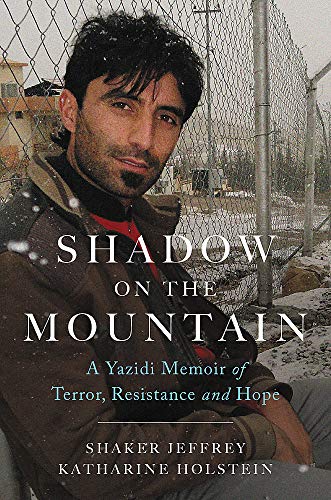
Shadow on the Mountain
by Shaker Jeffrey
"A Yazidi Memoir of Terror, Resistance and Hope"
Popularity
4.75 / 5
* A book's popularity is determined by how it compares to all other books on this website.
Where to buy?
Buy from Amazon* If you buy this book through the link above, we may receive a small commission at no extra cost to you.
Shadow on the Mountain by Shaker Jeffrey
Details
War:
War on Terror
Perspective:
Civilian
True Story:
Yes
Biography:
Yes
Region:
Middle East
Page Count:
320
Published Date:
2020
ISBN13:
9780306922831
Review of Shadow on the Mountain by Shaker Jeffrey
"Shadow on the Mountain" is a harrowing and deeply personal memoir by Shaker Jeffrey, a Yazidi man who recounts the devastating impact of the Islamic State's 2014 genocidal campaign against his community in northern Iraq. The book chronicles the author's transformation from a young interpreter working alongside American forces into a clandestine rescuer who risked his life repeatedly to save Yazidi women and girls who had been kidnapped and enslaved by ISIS militants. The result is a memoir that functions simultaneously as personal testimony, historical record, and a meditation on survival amid unimaginable cruelty.
The narrative begins with Jeffrey's childhood in the Sinjar region of Iraq, offering readers a window into Yazidi culture, religious practices, and the ancient roots of this minority community that has long faced persecution. This grounding in everyday life before the catastrophe makes the subsequent horror all the more striking. When ISIS forces swept through Sinjar in August 2014, they targeted the Yazidi population with systematic brutality, killing thousands of men and enslaving thousands of women and children. Jeffrey's account of these events, drawn from his own experiences and those of his family and community, provides an unflinching look at genocide as it unfolds in real time.
What distinguishes this memoir is its dual perspective. Jeffrey had worked as a translator for American Special Forces, which gave him certain skills and connections that later proved essential to his underground rescue operations. The book details how he used this position and his network of contacts to locate and extract Yazidi captives from territory controlled by ISIS, often operating with networks of smugglers and informants at extraordinary personal risk. These sections read with the tension of a thriller, yet they are grounded in the author's documented involvement in actual rescue missions, lending the narrative both urgency and credibility.
The memoir does not shy away from depicting the suffering endured by Yazidi women held in captivity, including accounts of sexual slavery and systematic abuse. These passages are difficult to read, as they should be, given the gravity of what occurred. Jeffrey handles this material with a measured approach that prioritizes bearing witness over sensationalism, allowing the stark facts to convey their own weight rather than relying on dramatic embellishment.
Beyond its historical and testimonial value, the book explores themes of identity, faith, and the psychological toll of war on those who survive it. Jeffrey writes candidly about the guilt and trauma that accompanied his rescue work, the strain it placed on his relationships, and the broader displacement experienced by Yazidis who fled their ancestral homeland. This personal dimension adds depth to what might otherwise read as purely documentary reporting, situating the genocide within the context of one man's lived experience and ongoing struggle to process what he witnessed.
The prose style is direct and unadorned, which suits the subject matter well. Jeffrey, working with a co-writer, avoids overwrought language in favor of clear, often spare descriptions that let the events speak for themselves. This approach occasionally results in pacing that feels uneven, particularly in sections that move quickly through complex political and military contexts that some readers may find require additional background knowledge to fully appreciate. Those unfamiliar with the broader geopolitical situation in Iraq and Syria during this period may benefit from supplementary reading to contextualize certain events.
Nonetheless, the memoir succeeds in its primary purpose: documenting an atrocity that received insufficient international attention when it occurred and ensuring that the experiences of Yazidi survivors are not forgotten. Jeffrey's firsthand account adds an invaluable layer of authenticity to the historical record, offering details and perspectives that journalistic coverage alone could not capture. The book stands as both a tribute to those who perished and were enslaved, and a testament to the courage of those, like the author himself, who risked everything to save others.
"Shadow on the Mountain" is an essential addition to the literature on the Yazidi genocide and contemporary Middle Eastern conflict. It serves as a sobering reminder of recent atrocities that demand continued attention and remembrance, delivered through the voice of someone who lived through them and chose to act.


