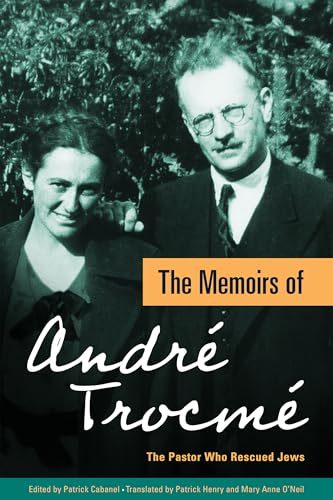
The Memoirs of André Trocmé
by André Trocmé
"The Pastor Who Rescued Jews"
Popularity
4.89 / 5
* A book's popularity is determined by how it compares to all other books on this website.
Where to buy?
Buy from Amazon* If you buy this book through the link above, we may receive a small commission at no extra cost to you.
The Memoirs of André Trocmé by André Trocmé
Details
War:
World War II
Perspective:
Civilian
True Story:
Yes
Biography:
Yes
Region:
Europe
Published Date:
2025
ISBN13:
9781636081595
Summary
The Memoirs of André Trocmé recounts the experiences of a French Protestant pastor who, along with his congregation in Le Chambon-sur-Lignon during World War II, helped rescue thousands of Jews from Nazi persecution. Trocmé describes the nonviolent resistance movement he led, the moral convictions that guided his actions, and the risks his community faced while providing shelter and false documents to refugees. The memoir offers a firsthand account of courageous humanitarian efforts during the Holocaust and reflects on faith-driven activism in the face of extreme danger.
Review of The Memoirs of André Trocmé by André Trocmé
"The Memoirs of André Trocmé: The Pastor Who Rescued Jews" offers a firsthand account of one of the most remarkable acts of collective moral courage during the Second World War. André Trocmé, a French Protestant pastor, led the community of Le Chambon-sur-Lignon in sheltering thousands of Jewish refugees from Nazi persecution. This memoir, compiled and translated for English-speaking audiences, provides insight into the man behind that history and the convictions that shaped his actions.
Trocmé's writing reflects the voice of a pastor deeply rooted in his faith and committed to nonviolence. Rather than presenting himself as a hero, he frames the rescue efforts as a natural extension of the values he preached from the pulpit. This humility runs throughout the narrative, offering a refreshing contrast to more dramatized accounts of wartime resistance. The memoir situates his actions within a broader theological and ethical framework, showing how his pacifist convictions, shaped by his upbringing and religious education, informed his response to the moral crisis unfolding around him.
One of the strengths of this book lies in its portrayal of Le Chambon-sur-Lignon as a community effort rather than the work of a single individual. Trocmé consistently credits his fellow pastors, congregants, and townspeople for the collective decision to defy Vichy authorities and German occupiers. This communal framing is historically significant, as it corrects the tendency to attribute the rescue efforts solely to Trocmé himself. The memoir makes clear that the moral resolve of an entire village, reinforced by shared religious conviction and a tradition of dissent among the Huguenot population, made such widespread resistance possible.
The book also provides valuable historical context about the Vichy regime and the pressures faced by those who opposed its policies. Trocmé does not shy away from describing the risks involved, including his own arrest and interrogation, nor does he dwell excessively on danger for dramatic effect. Instead, the tone remains measured and reflective, consistent with the character that emerges throughout the text. Readers seeking a sensationalized war narrative may find this restraint unexpected, but it aligns with the sincerity that defines Trocmé's voice.
Theological reflection is woven throughout the memoir, and readers with an interest in religious history will find substantial material here. Trocmé discusses his understanding of Christian duty, the role of conscience, and his opposition to violence as a matter of principle rather than political expediency. These sections may require patience from readers primarily interested in historical events, but they are essential to understanding why Trocmé and his community acted as they did. The interplay between faith and action is central to the book's overall message.
The translation and editorial work involved in bringing this memoir to publication deserve mention as well. Given that Trocmé wrote in French and passed away before the manuscript reached a wider international audience, the editorial process was crucial in shaping the final work. The result is a text that maintains clarity and readability while preserving the reflective, sometimes discursive style of a man writing after decades of ministry and reflection.
This memoir will appeal most to readers interested in religious history, the French Resistance, or the moral dimensions of wartime decision-making. It is not a fast-paced historical thriller, nor does it attempt to be. Instead, it offers a thoughtful, personal account from someone who lived through extraordinary circumstances and sought to explain, in his own words, why he and his community chose the path they did.
Overall, "The Memoirs of André Trocmé" stands as an important primary source for understanding the events at Le Chambon-sur-Lignon. It complements other historical accounts of the rescue efforts there, offering a perspective grounded in personal conviction rather than external analysis. For readers seeking to understand the intersection of faith, ethics, and resistance during one of history's darkest periods, this memoir provides a valuable and enduring contribution.