The Mermaid And The Messerschmitt
by Rulka Langer
Popularity
3.9 / 5
* A book's popularity is determined by how it compares to all other books on this website.
Where to buy?
Buy from Amazon* If you buy this book through the link above, we may receive a small commission at no extra cost to you.
The Mermaid And The Messerschmitt by Rulka Langer
Details
War:
World War II
Perspective:
Civilian
True Story:
Yes
Biography:
Yes
Region:
Europe
Page Count:
510
Published Date:
2015
ISBN13:
9781782897231
Review of The Mermaid And The Messerschmitt by Rulka Langer
"The Mermaid and the Messerschmitt: War Through a Woman's Eyes, 1939-1940" is Rulka Langer's firsthand account of the German invasion and siege of Warsaw at the outset of the Second World War. Originally published in 1942 under the title "The Mermaid and the Messerschmitt" and later reissued, the memoir offers a rare civilian perspective on the opening months of the conflict, written by a woman who lived through the bombardment of her city and the collapse of the world she had known.
Langer was a Polish woman educated partly in the United States, and this background gives her narrative a distinctive voice. She writes in fluent, idiomatic English, addressing an American and British readership directly, explaining Polish customs, geography, and social conditions to audiences who may have known little about Poland beyond newspaper headlines. This makes the book accessible to readers unfamiliar with Polish history, while still offering a level of detail that will interest those who already have some knowledge of the period.
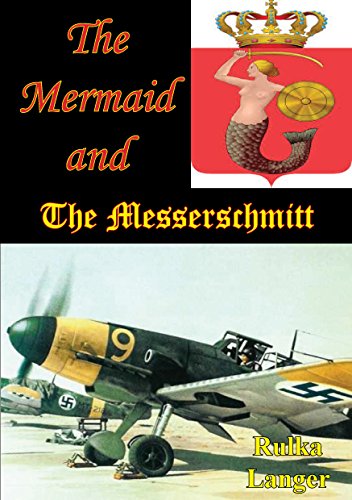
The title itself draws on the mermaid, the traditional symbol of Warsaw depicted on the city's coat of arms, and the Messerschmitt, the German fighter aircraft that came to represent the airborne threat facing the city. This juxtaposition captures the central tension of the book: an ancient, storied city confronted by the mechanized violence of modern warfare. Langer uses this symbolism sparingly but effectively, allowing the historical and personal narrative to carry the emotional weight rather than relying on literary flourish.
The memoir covers the period from the German invasion in September 1939 through the early months of German occupation in 1940. Langer describes the anxious weeks before the invasion, the sudden shift from ordinary domestic life to wartime chaos, and the daily hardships of surviving bombing raids, shortages of food and water, and the breakdown of city services. As a mother responsible for young children during this period, she brings a domestic and maternal lens to events that are often recounted in military or political terms elsewhere. This perspective distinguishes her account from many other wartime memoirs, which tend to focus on soldiers, resistance fighters, or political figures rather than the experience of civilians trying to protect their families amid collapsing infrastructure and constant danger.
Her descriptions of the Luftwaffe's bombing campaign against Warsaw are particularly vivid, conveying both the physical destruction of the city and the psychological toll of living under sustained aerial attack. She writes about the uncertainty of not knowing when the next raid would come, the difficulty of finding shelter, and the grim adaptation to a life punctuated by sirens and falling masonry. At the same time, she captures moments of resilience and even dark humor among Warsaw's residents, showing how ordinary people tried to maintain a sense of normalcy and dignity under extraordinary pressure.
The book also documents the early period of German occupation, when the practical realities of defeat began to set in: the imposition of new rules, the disappearance of familiar freedoms, and the growing awareness that the war would not be a brief interruption but a prolonged and transformative event. Langer's observations on this transition are measured rather than sensational, reflecting the confusion and adjustment that characterized this early phase of occupation before the full scope of Nazi policies became apparent.
As a primary source, the memoir holds value for readers interested in the lived experience of the Second World War's early stages, particularly the September Campaign and the siege of Warsaw. It complements more general histories of the period by providing texture and immediacy that broader accounts often lack. Langer's prose is clear and unadorned, favoring direct description over elaborate literary technique, which suits the urgency and gravity of her subject matter.
"The Mermaid and the Messerschmitt" remains a useful and moving document for anyone seeking to understand how the outbreak of war was experienced by civilians, particularly women, in one of its earliest and most devastated cities. It is a memoir grounded in specific historical circumstance, offering insight into a pivotal moment without resorting to embellishment or generalization.


