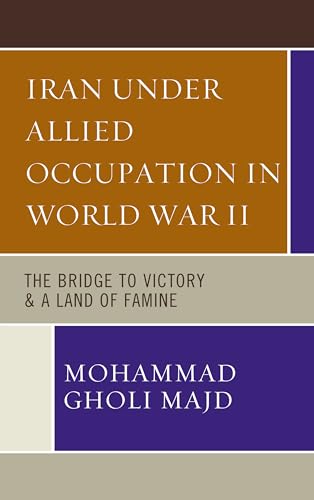
Iran Under Allied Occupation in World War II
by Mohammad Gholi Majd
"The Bridge to Victory & a Land of Famine"
Popularity
1.79 / 5
* A book's popularity is determined by how it compares to all other books on this website.
Where to buy?
Buy from Amazon* If you buy this book through the link above, we may receive a small commission at no extra cost to you.
Iran Under Allied Occupation in World War II by Mohammad Gholi Majd
Details
War:
World War II
Perspective:
Researcher
True Story:
Yes
Biography:
No
Region:
Middle East
Published Date:
2016
ISBN13:
9780761867388
Description
Brief Summary
Iran Under Allied Occupation in World War II by Mohammad Gholi Majd provides an in-depth exploration of a critical, yet often overlooked, aspect of World War II history. It delves into the severe impact of the Allied occupation on Iran, illustrating how the country, caught amidst the global conflict, became a strategic supply route to Russia and a significant source of fuel for the Allies. The book includes an account of the severe hardships faced by the Iranian people due to commandeered resources, food scarcity, and rampant epidemics, specifically highlighting the devastating famine and typhus outbreak of 1942-43.
Main Themes and Topics
The main themes of the book revolve around the disruptive impact of the Allied occupation on Iran's socio-economic structures during World War II. Majd outlines the catastrophic effects of resource seizure by the Allies, the economic strain caused by forced currency inflation, and the introduction of external populations such as Polish refugees. These themes are underscored by the portrayal of Iran's struggle for survival amid depleted resources, contributing to widespread famine and disease which resulted in an astounding humanitarian crisis.
Writing Style and Tone
Mohammad Gholi Majd adopts a meticulous and scholarly approach in narrating the events of Iran under Allied occupation. The tone of the book is analytical and factual, leaning heavily on a wealth of primary sources including U.S. diplomatic, military, and intelligence records, as well as British documentation. This rigorous reliance on documented evidence allows Majd to present a compelling and credible account, although the dense factual presentation may challenge some readers seeking a more narrative-driven history.
Criticism
One point of criticism that may be directed at Iran Under Allied Occupation in World War II is its intense focus on factual detail, which might overshadow the human element of storytelling for some readers. While the thorough documentation and research are commendable, they might render the book more suitable to readers with a keen interest in historical data rather than those looking for an engaging narrative. Additionally, the subject matter, densely packed with data and reports, may be demanding for casual history enthusiasts.