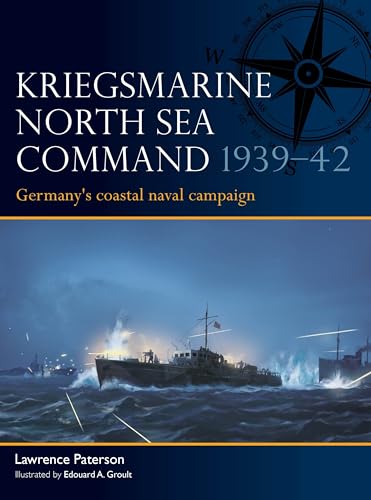
Kriegsmarine North Sea Command 1939–42
by Lawrence Paterson
"Germany's Coastal Naval Campaign"
Popularity
4.83 / 5
* A book's popularity is determined by how it compares to all other books on this website.
Where to buy?
Buy from Amazon* If you buy this book through the link above, we may receive a small commission at no extra cost to you.
Kriegsmarine North Sea Command 1939–42 by Lawrence Paterson
Details
War:
World War II
Military Unit:
Kriegsmarine
Biography:
No
Region:
Europe
Published Date:
2025
ISBN13:
9781472867438
Summary
This book examines the German Navy's operations in the North Sea during the early years of World War II. Lawrence Paterson details the Kriegsmarine's coastal defense strategies, naval engagements, and tactical challenges faced while protecting Germany's northern maritime borders. The work covers the period from 1939 to 1942, focusing on minelaying operations, coastal artillery, submarine warfare, and surface fleet actions. Paterson provides insight into the organizational structure and operational doctrine of the North Sea Command, illustrating how Germany attempted to control these vital waters during the opening phase of the war.
Review of Kriegsmarine North Sea Command 1939–42 by Lawrence Paterson
Lawrence Paterson's examination of the Kriegsmarine's North Sea operations during the early years of World War II fills a notable gap in naval history literature. While much attention has been devoted to U-boat warfare in the Atlantic and major surface engagements, the coastal naval campaign conducted by Germany in the North Sea has received comparatively little comprehensive treatment. This work addresses that oversight by focusing on the often-overlooked activities of smaller vessels, coastal forces, and the strategic considerations that shaped operations in these treacherous waters between 1939 and 1942.
The book explores the organizational structure and operational doctrine of the Kriegsmarine's coastal command during this critical period. Paterson details how Germany attempted to secure its maritime flanks, protect vital shipping lanes, conduct minelaying operations, and harass Allied coastal traffic through a combination of motor torpedo boats, minesweepers, naval artillery, and light surface craft. The North Sea represented a challenging operational environment, with its unpredictable weather, strong currents, and proximity to enemy shores creating unique tactical problems that required specialized vessels and training.
One of the work's strengths lies in its attention to the human dimension of these operations. The crews manning E-boats, R-boats, and other coastal craft operated under dangerous conditions, facing not only enemy action but also the constant threat posed by mines, both Allied and German. Night operations were particularly hazardous, requiring exceptional navigation skills and nerves of steel as small craft moved through narrow channels and treacherous sandbanks. Paterson conveys the technical challenges and the courage required of these sailors without resorting to romanticization or excessive dramatization.
The strategic context receives thorough treatment throughout the narrative. Germany's need to maintain coastal security while simultaneously prosecuting offensive operations created tensions in resource allocation and operational priorities. The North Sea command had to balance defensive responsibilities, including protecting German coastal shipping and infrastructure, with aggressive actions against British convoys and naval forces. This dual mandate became increasingly difficult to maintain as the war progressed and German resources became stretched across multiple theaters.
Paterson examines the evolution of tactics and technology during this period. The development of motor torpedo boat tactics, improvements in radar and detection equipment, and the ongoing struggle between mine warfare and minesweeping operations all receive careful analysis. The cat-and-mouse game between German coastal forces and the Royal Navy's own light forces created a continuous cycle of tactical innovation and adaptation. The author demonstrates how both sides learned from experience and modified their approaches based on hard-won lessons.
The book also addresses the impact of geography on operations. The North Sea's configuration, with its narrow exits and the proximity of British bases, meant that German forces operated under constant threat of interception. The English Channel and the waters around the Dutch and Danish coasts became contested zones where small-scale actions occurred with regularity. These engagements, while individually minor compared to major fleet actions, cumulatively had significant effects on both sides' ability to conduct maritime operations.
Material drawn from German naval records provides insight into the planning and execution of coastal operations. The bureaucratic and command structures of the Kriegsmarine, often Byzantine in their complexity, influenced operational effectiveness in both positive and negative ways. Coordination between different branches of the service, relationships with the Luftwaffe, and the impact of higher-level strategic decisions on tactical operations all emerge as important factors in the campaign's conduct.
The narrative covers the gradual shift in operational tempo and strategic circumstances as the period progressed. The relatively successful early operations gave way to increasing difficulties as British defenses strengthened and German resources became strained. By 1942, the character of the North Sea campaign had changed considerably from its 1939 origins, reflecting broader shifts in the war's trajectory.
Paterson's work serves as a valuable resource for readers interested in naval history, particularly those seeking to understand the full scope of maritime operations during World War II beyond the better-known battles and campaigns. The book demonstrates that naval warfare consisted not only of dramatic fleet engagements and submarine warfare but also of the grinding, dangerous work conducted by coastal forces in contested waters. This aspect of the Kriegsmarine's war effort deserves recognition, and this study provides a solid foundation for understanding these operations and their place in the broader naval conflict.