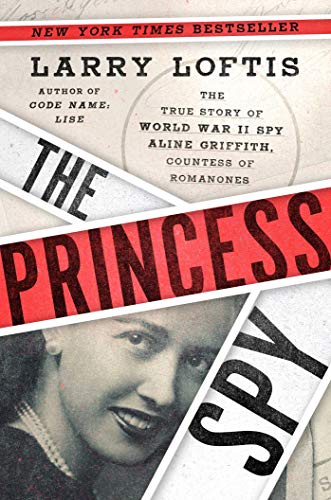
The Princess Spy
by Larry Loftis
"The True Story of World War II Spy Aline Griffith, Countess of Romanones"
Popularity
4.51 / 5
* A book's popularity is determined by how it compares to all other books on this website.
Where to buy?
Buy from Amazon* If you buy this book through the link above, we may receive a small commission at no extra cost to you.
The Princess Spy by Larry Loftis
Details
War:
World War II
Perspective:
Spying
True Story:
Yes
Biography:
Yes
Region:
Europe
Page Count:
384
Published Date:
2021
ISBN13:
9781982143862
Summary
The Princess Spy tells the true story of Aline Griffith, an American model who became a spy for the OSS during World War II. Operating undercover in Spain, she gathered intelligence on Nazi activities while navigating the dangers of wartime espionage. After the war, she married a Spanish count and became the Countess of Romanones. Author Larry Loftis chronicles her transformation from a young American woman into a skilled operative, highlighting her courage, resourcefulness, and the high-stakes missions she undertook during one of history's most critical periods.
Review of The Princess Spy by Larry Loftis
Larry Loftis's "The Princess Spy" tells the remarkable true story of Aline Griffith, an American woman from a modest background in New York who became one of the youngest female operatives recruited by the Office of Strategic Services during World War II. The book traces her transformation from an unassuming young woman with dreams of adventure into a skilled intelligence agent operating in wartime Madrid, a city that served as a hotbed of espionage due to Spain's neutral but politically complex position during the conflict.
Loftis structures the narrative with the pacing of a thriller, drawing on Griffith's own memoirs, personal interviews, and historical records to reconstruct her journey. The author does not simply recount events but immerses readers in the atmosphere of Madrid during the early 1940s, a city filled with Nazi sympathizers, British operatives, and Spanish aristocrats, all navigating a delicate balance of loyalties. Griffith's assignment placed her at the center of this world, where she gathered intelligence, cultivated relationships with informants, and helped uncover Nazi smuggling operations, all while maintaining a cover identity that required constant vigilance.
One of the book's strengths lies in its portrayal of Griffith as a fully realized person rather than a caricature of a glamorous spy. Loftis captures her intelligence, resourcefulness, and courage without losing sight of the genuine risks she faced. The narrative does not shy away from depicting the psychological toll of espionage work, including the isolation and constant fear of exposure that came with living a double life. This balance between excitement and authenticity gives the book credibility, distinguishing it from more sensationalized accounts of wartime spies.
The research underpinning the book is evident throughout. Loftis draws on primary sources, including Griffith's own writings after the war, and he supplements these with broader historical context about the OSS, the political situation in Spain, and the larger intelligence war being waged across Europe. This grounding in verifiable history lends weight to the more dramatic elements of Griffith's story, helping readers understand how someone so young and inexperienced could rise to such a position of trust and responsibility within Allied intelligence operations.
The book also explores Griffith's life after the war, including her marriage into Spanish nobility, which is how she came to hold the title Countess of Romanones. This later chapter of her life adds another layer to the narrative, illustrating how her wartime experiences shaped her subsequent choices and relationships. Loftis handles this transition with care, showing how the skills and connections she developed during her intelligence work continued to influence her long after the war had ended.
Stylistically, Loftis writes with clarity and momentum, avoiding unnecessary embellishment while still crafting scenes that feel vivid and immediate. His background in writing about espionage and historical figures serves him well here, as he knows how to balance factual reporting with narrative tension. Readers who enjoy history that reads with the energy of fiction will find this approach satisfying, though the book never sacrifices accuracy for the sake of drama.
Some readers may wish for even greater depth in certain areas, such as more extensive exploration of the broader intelligence networks Griffith worked within, or additional context about the other operatives she encountered. However, the book's focused approach on Griffith's personal experience is likely intentional, keeping the narrative tight and character-driven rather than attempting to cover the entire scope of Allied intelligence operations during the war.
Overall, "The Princess Spy" succeeds as both an engaging piece of narrative nonfiction and a valuable contribution to the historical record of women's roles in wartime intelligence. Aline Griffith's story stands out not only for its inherent drama but for what it reveals about the opportunities and dangers faced by those who served in unconventional roles during World War II. Loftis has crafted a book that honors her legacy while providing readers with an accessible and compelling entry point into a lesser-known aspect of the war's history.


