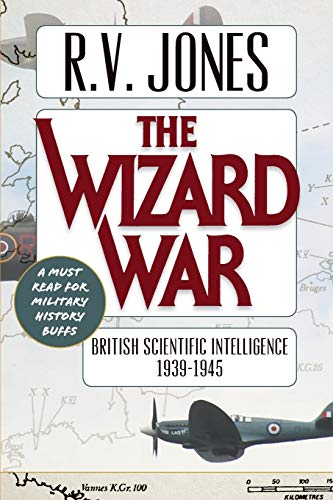
The Wizard War
by R. V. Jones
"British Scientific Intelligence, 1939-1945"
Popularity
4.75 / 5
* A book's popularity is determined by how it compares to all other books on this website.
Where to buy?
Buy from Amazon* If you buy this book through the link above, we may receive a small commission at no extra cost to you.
The Wizard War by R. V. Jones
Details
War:
World War II
Perspective:
Researcher
True Story:
Yes
Biography:
No
Region:
Europe
Page Count:
610
Published Date:
2018
ISBN13:
9781635610796
Summary
The Wizard War is R.V. Jones's firsthand account of British scientific intelligence operations during World War II. As a key figure in intelligence, Jones describes how scientists countered German technological threats, particularly radio navigation systems used to guide bombers during the Blitz. The book details the cat-and-mouse game between British and German scientists, covering innovations like radar countermeasures and the intelligence efforts to understand enemy weapons such as the V-1 and V-2 rockets. It provides an insider's perspective on how scientific intelligence significantly influenced the war's outcome.
Review of The Wizard War by R. V. Jones
R. V. Jones's account of British scientific intelligence during World War II stands as one of the most remarkable insider perspectives on the secret war fought between Allied and Axis scientists. Published initially in 1978, this work draws directly from Jones's experience as the head of scientific intelligence for the British Air Ministry, placing readers at the center of crucial technological battles that shaped the outcome of the war.
The narrative focuses on the intersection of science, espionage, and military strategy during a period when technological innovation could mean the difference between victory and defeat. Jones demonstrates how scientific intelligence played a vital role in countering German technological advances, from radar systems to guided weapons. The book reveals the painstaking detective work required to piece together fragments of information about enemy capabilities, often from seemingly unrelated sources such as aerial photographs, captured equipment, prisoner interrogations, and signals intelligence.
One of the book's greatest strengths lies in its detailed examination of the war of the beams, the electronic warfare struggle over navigation and bombing systems. Jones provides an authoritative account of how British scientists identified and countered German radio beam systems designed to guide bombers to their targets with unprecedented accuracy. This section illustrates the rapid pace of technological adaptation on both sides, as each innovation prompted a counter-measure, which in turn spurred further development.
The author also dedicates considerable attention to the intelligence efforts surrounding German rocket development, particularly the V-1 flying bomb and V-2 rocket programs. Jones describes the challenges of assessing these weapons from fragmentary evidence and the debates within British intelligence circles about the scale and nature of the threat. These chapters highlight the difficulties of making strategic decisions based on incomplete information under tremendous time pressure.
Jones writes with the authority of someone who participated directly in the events described, yet maintains enough perspective to acknowledge uncertainties and disagreements that existed at the time. The narrative includes accounts of bureaucratic obstacles, interdepartmental rivalries, and the challenges of convincing military leaders to act on scientific assessments. This candid approach adds credibility and depth to what could have been merely a triumphalist account.
The technical content is substantial but generally accessible to readers without specialized scientific backgrounds. Jones takes care to explain complex concepts in understandable terms while providing enough detail to satisfy those with technical knowledge. This balance makes the book valuable both as a historical document and as an engaging narrative for general readers interested in World War II history.
Throughout the work, Jones emphasizes the importance of individual initiative and creative thinking in intelligence work. The book profiles various scientists and officers who contributed to British intelligence efforts, showing how diverse expertise and perspectives proved essential to solving complex problems. These human elements prevent the narrative from becoming overly technical or abstract.
The author's position provides unique insights into high-level decision-making processes and strategic debates that occurred behind the scenes. Jones had direct access to Churchill and other senior leaders, and his account includes details of these interactions that illuminate how scientific intelligence influenced major wartime decisions. These glimpses into the machinery of wartime government add historical value beyond the strictly scientific and technical content.
The book does reflect the limitations of a single perspective, as Jones naturally focuses on areas where he had direct involvement or knowledge. Some topics receive less attention than others, and the narrative emphasizes British achievements while giving less coverage to Allied contributions, particularly American scientific intelligence efforts. However, within its scope, the work provides comprehensive coverage of British scientific intelligence operations.
Jones's writing style is clear and methodical, reflecting his scientific training. The chronological organization helps readers follow the evolution of intelligence problems and solutions throughout the war years. While the prose occasionally becomes dense with technical detail, the overall narrative remains engaging through Jones's evident enthusiasm for his subject and his ability to convey the stakes involved in these intelligence battles.
The lasting significance of this work extends beyond its historical content. It offers valuable lessons about the role of scientific expertise in national security, the challenges of intelligence assessment, and the importance of maintaining technological awareness in military planning. These themes remain relevant decades after publication, ensuring the book's continued relevance for students of intelligence history, military strategy, and the history of science and technology during World War II.